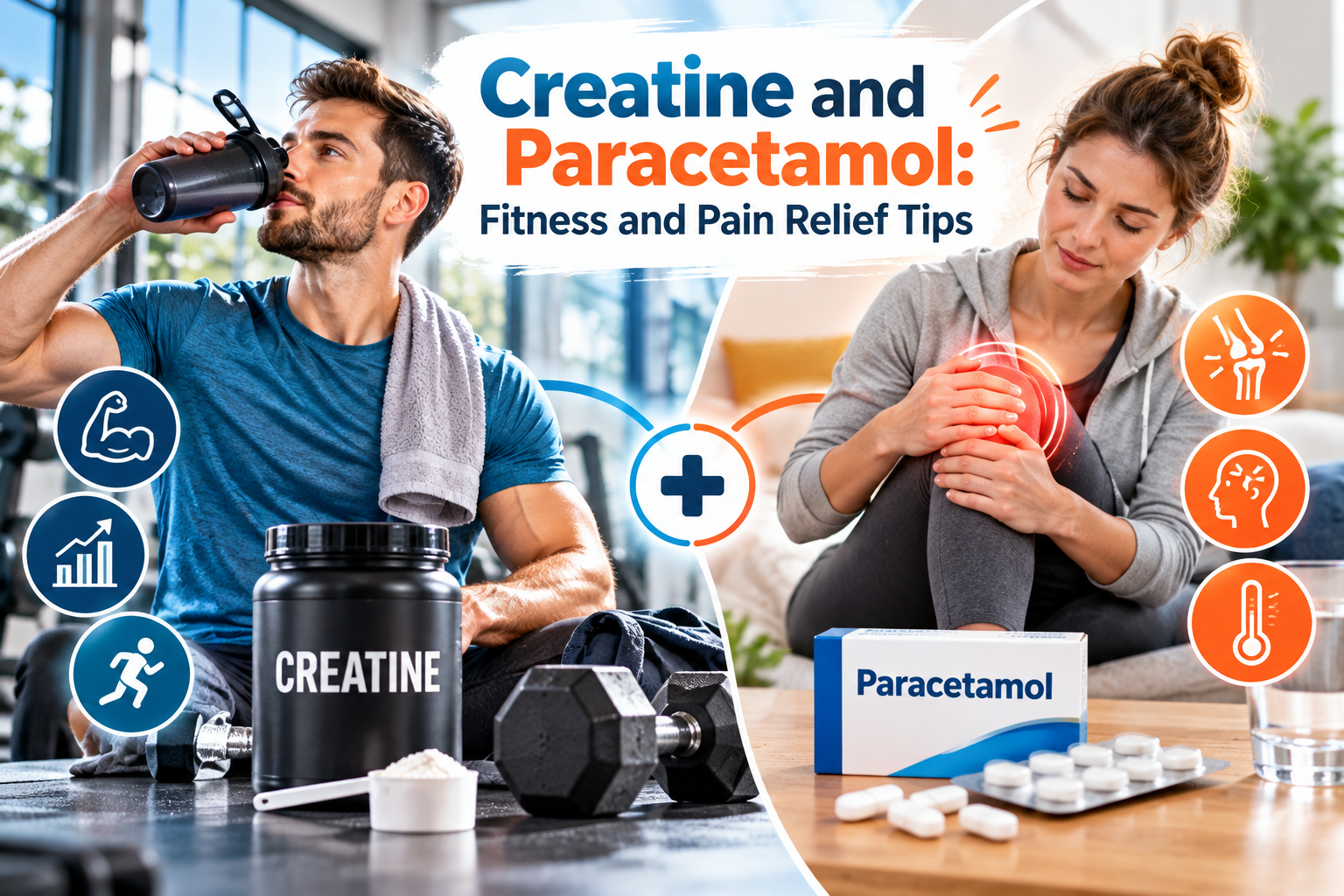
Staying active can improve strength, fitness and general wellbeing, but it also raises questions about supplements, muscle soreness and everyday pain relief. Creatine is often considered by people who want to improve their gym performance, while paracetamol is commonly used to manage headaches, aches and fever.
Although these products serve different purposes, understanding their benefits and limitations can help you make safer choices. For people in Ireland, it is particularly important to buy supplements from reputable suppliers, use medicines according to their instructions and know when pain requires professional attention.
This guide explores how creatine fits into a fitness routine, how paracetamol should be used responsibly and what to consider when balancing exercise with recovery.
Creatine and Your Fitness Goals
Creatine is a substance naturally produced by the body. It is stored mainly in muscles, where it helps provide energy during short periods of intense activity.
The body produces creatine from amino acids, and foods such as meat and fish also supply it. Some people use creatine supplements to support resistance training, sprinting and other activities that involve repeated high-intensity effort.
Creatine monohydrate is the most extensively studied form. Research indicates that it can improve performance during repeated intense exercise and support increases in strength and lean body mass when combined with resistance training.
However, the potential benefits depend on your goals. Someone who regularly performs strength training may find creatine useful, whereas someone whose main activity is gentle walking may not need it.
Creatine is not a substitute for training, nutrition or recovery. Before purchasing a supplement, consider whether it fits your exercise routine and whether a healthcare professional should review its suitability.
Is Creatine Suitable for Beginners?
People new to exercise sometimes assume that supplements are necessary to see results. In reality, beginners can make substantial progress by learning proper technique, following a manageable training plan and eating balanced meals.
If you are starting at the gym, focus first on building consistency. Choose exercises appropriate for your ability, increase resistance gradually and allow your muscles time to recover between demanding sessions.
Creatine may be an option for some healthy adults who participate in regular high-intensity training, but it is not essential for beginners.
Some users experience a small increase in body weight because muscles retain more water. Digestive discomfort can also occur. People with kidney disease or other significant medical conditions should speak with a healthcare professional before taking creatine.
When shopping in Ireland, check the label, serving instructions and full ingredient list. Avoid products making unrealistic claims about rapid muscle growth or guaranteed results.
The Food Safety Authority of Ireland provides information about food supplements:
Paracetamol: Understanding Its Role in Everyday Health
Paracetamol is a medicine used to relieve pain and reduce fever. It may be helpful for conditions such as headaches, toothache, period pain and certain muscle aches.
It is not designed to improve sporting performance, increase strength or accelerate muscle growth. Although it can reduce pain, it does not necessarily treat the underlying cause.
For example, mild muscle soreness after an unfamiliar workout often improves with rest, gentle movement and time. Pain caused by a significant strain or other injury may require assessment rather than simply taking a painkiller.
If pain is severe, persistent or accompanied by considerable swelling, weakness or difficulty moving, seek medical advice. Do not use pain relief to push through an injury or continue an activity that makes symptoms worse.
For Irish residents, the HSE provides information about paracetamol, including its uses and precautions:
Why Paracetamol Dosage Matters
Paracetamol is widely used, but taking too much can cause serious liver damage. An overdose may initially cause few or no symptoms, so it is important not to wait until you feel unwell before seeking help.
Follow the instructions on your specific medicine’s packaging or patient information leaflet. Dosing recommendations can vary according to age, formulation and individual health circumstances.
One common mistake is taking paracetamol alongside a cold or flu remedy that already contains the same ingredient. Always check the active ingredients before combining medicines.
Speak with a pharmacist or GP before using paracetamol if you have liver or kidney problems, weigh less than 50 kg, take medicines that may interact with it or regularly drink excessive amounts of alcohol.
If you accidentally take more than the recommended dose, seek urgent medical advice immediately, even if you feel well.
What Should You Do About Post-Workout Soreness?
Muscle soreness can occur after unfamiliar exercise or an increase in training intensity. It often develops several hours after a workout and gradually improves over the following days.
However, not all exercise-related pain is ordinary soreness. A sudden sharp pain, significant swelling, unusual weakness or an inability to use a limb normally may indicate an injury.
Here are practical ways to support recovery:
Allow enough rest. Avoid repeatedly training the same muscles at high intensity when they have not recovered.
Eat balanced meals. Include protein sources such as eggs, fish, dairy products, beans, lentils or tofu, together with vegetables and wholegrains.
Drink fluids regularly. Replace fluids lost through sweating and pay attention to hydration during exercise.
Return gradually. After a break or injury, increase training volume and intensity in manageable steps.
Get professional advice when needed. A GP or physiotherapist can help assess persistent pain and suggest appropriate treatment.
Creatine may support training performance over time, but it is not an immediate remedy for soreness. Paracetamol may relieve certain types of pain, but it should not be used to mask an injury.
Can You Use Creatine and Paracetamol on the Same Day?
These products have different purposes, and taking both is not automatically necessary simply because you exercise.
Whether they are appropriate for you depends on your health, the reason for taking paracetamol, any other medicines you use and the ingredients in your supplement.
If you have a chronic condition, take regular prescription medicines or are unsure about possible interactions, ask a pharmacist or GP for individual guidance before combining products.
Do not exceed the recommended paracetamol dose, and do not assume that taking a sports supplement makes it safe to ignore pain. If you are using pain relief frequently after workouts, consider whether your training routine or an underlying problem needs attention.
Building a Sustainable Fitness Routine in Ireland
A practical fitness routine does not need to involve expensive supplements or complicated recovery products.
Start with activities you enjoy, such as walking, cycling, swimming or strength training. Combine regular movement with balanced meals, adequate sleep and realistic goals.
If you choose creatine, use a clearly labelled product from a reputable supplier and consider professional advice if you have medical concerns. If you need paracetamol, use it according to the instructions and investigate pain that persists or repeatedly returns.
For additional guidance on staying active and improving health, visit the HSE:
Conclusion
Creatine and paracetamol can have useful but very different roles. Creatine may help support strength and repeated high-intensity exercise, while paracetamol can relieve certain types of pain and reduce fever when used correctly.
For people in Ireland, informed choices mean understanding the evidence, checking product labels and seeking advice when necessary. Beginners should prioritise consistent exercise and recovery before focusing on supplements, while anyone experiencing persistent pain should look for the underlying cause.
A sensible approach to fitness combines suitable training, balanced nutrition, sufficient rest and responsible medicine use.
