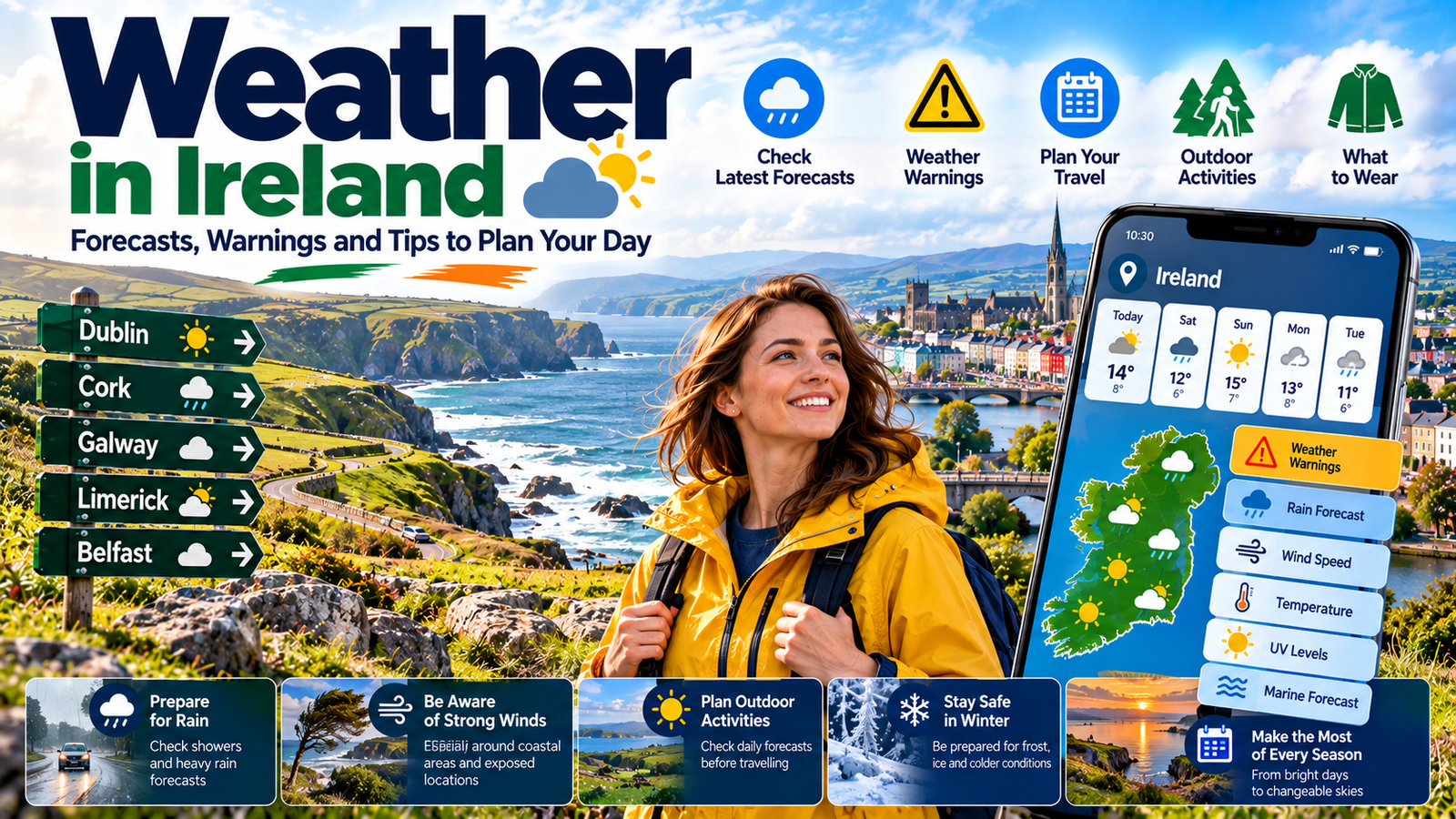
Planning a day out in Ireland? Whether you are travelling to work, taking the children to school, heading to the coast or organising a weekend trip, checking the weather forecast can help you prepare for the day ahead.
Irish weather conditions can change quickly. A bright morning may turn cloudy, showers can arrive unexpectedly, and strong winds may affect coastal areas or exposed roads. This is why checking a reliable forecast is useful for everyday life, not just for people planning holidays.
From Dublin and Cork to Galway, Limerick and smaller towns, local conditions can vary across the country. Knowing how to check the forecast, understand weather warnings and prepare for different conditions can help you make better plans.
This guide explains how to check the weather in Ireland, understand forecast information and stay prepared throughout the year.
Where Can You Check the Weather in Ireland?
One of the most useful resources for Irish residents is Met Éireann, Ireland’s national meteorological service. It provides national and regional forecasts, local forecasts, rainfall radar, marine information and weather warnings.
For forecasts covering different parts of the country, visit:
You can check the expected conditions for your area, review the outlook for coming days and look for information about rain, wind and temperatures.
Helpful tip: Check the forecast for the place you are actually visiting rather than relying only on a national summary. Conditions in coastal areas may differ from those inland, and one county may experience showers while another remains dry.
Why Does Irish Weather Change So Quickly?
Ireland’s climate is influenced by the Atlantic Ocean, which helps create changeable conditions throughout the year. Atlantic weather systems can bring cloud, rain and wind, while calmer periods may provide sunshine and clearer skies.
Local geography also matters. Hills, mountains and coastal locations can experience different conditions from nearby low-lying areas. Wind exposure and the movement of weather systems can also affect how conditions develop during the day.
This means that a forecast is best understood as an informed prediction, not a guarantee that every location will experience exactly the same conditions.
When planning an outdoor activity, check the forecast again on the day. This is particularly useful if you are walking, cycling, driving long distances or spending time near the sea.
How to Understand a Weather Forecast
Weather forecasts contain several details that can help you decide what to wear, when to travel and whether to change your plans.
Temperature
The forecast temperature gives you an idea of how warm or cold the day may feel. However, wind, rain and exposure can affect how comfortable it feels outdoors.
During colder months, wear suitable layers and check for frost or icy conditions where relevant. In warmer weather, remember that cloudy skies do not always mean there is no risk from ultraviolet radiation.
Rainfall
Rain forecasts help you decide whether to carry a waterproof jacket, allow extra time for your journey or move an outdoor activity indoors.
Look at both the expected amount of rain and the timing. A short shower may have little impact on your plans, while prolonged or heavy rain can affect visibility, roads and walking conditions.
If you are organising an outdoor event, keep an alternative option available in case the forecast changes.
Wind Speed
Wind is particularly important around the Irish coast, on bridges, in exposed countryside and on higher ground.
Strong gusts can make cycling difficult, affect high-sided vehicles and create hazards from falling branches or loose objects. If a warning is in place, follow the advice for your area and activity.
Sunshine and Cloud
Sunshine forecasts can help you plan outdoor activities, but conditions may change during the day. If you are organising a picnic, beach visit or outdoor event, consider having a backup plan in case showers develop.
Checking the forecast before leaving can help you decide whether to bring extra clothing, sun protection or waterproof equipment.
What Do Irish Weather Warnings Mean?
Met Éireann uses a colour-coded system to communicate the potential impacts of severe weather. The main warning levels are Yellow, Orange and Red.
- Yellow — Be aware: Weather may create localised danger, particularly depending on your location or activity.
- Orange — Be prepared: Conditions may be dangerous or significantly disruptive.
- Red — Take action: Conditions are expected to be extremely dangerous or destructive, and protective action is necessary.
A warning may relate to heavy rain, strong winds, snow, ice, high temperatures or other hazardous conditions.
The impact can differ between locations, even within the same warning area. Check the affected counties, expected timing and official safety advice rather than relying on the warning colour alone.
For current warnings and advisories, visit:
If severe weather is forecast, consider whether you need to change your travel plans, secure outdoor items or avoid exposed areas. Follow instructions from the relevant authorities.
How Weather Can Affect Travel in Ireland
Weather conditions can influence road journeys, rail services, buses, cycling and walking. Heavy rain may reduce visibility and increase the risk of localised flooding. Strong winds can make driving difficult in exposed areas, while frost and ice may create slippery surfaces during colder periods.
Before setting off on a long journey:
- Check the forecast along your route.
- Look for current weather warnings.
- Allow extra travel time when conditions are poor.
- Keep your windscreen, lights and wipers in good condition.
- Check your transport operator’s updates if you are using public transport.
- Avoid driving through floodwater or taking unnecessary risks.
If your journey is not essential and conditions are dangerous, consider postponing it until it is safer to travel.
Seasonal Weather Tips for Irish Residents
Spring
Spring can bring a mixture of sunshine, showers and cool breezes. Keep a waterproof layer handy and check the forecast before planning outdoor activities.
Summer
Longer daylight hours make summer suitable for walks, festivals, holidays and trips to the coast. However, rain and strong winds can still occur, so check conditions before travelling. Protect your skin when the UV index indicates a risk, even if the sky is cloudy.
Autumn
Autumn often brings changeable conditions, falling leaves and periods of wind and rain. Check travel conditions during unsettled weather and keep paths and drains around your property clear where practical.
Winter
Cold temperatures, frost, ice, strong winds and heavy rain can create additional challenges. Prepare your vehicle for winter conditions, dress warmly and allow extra time for journeys when necessary.
These are general seasonal considerations, not a prediction of what will happen on a particular day. Always use the latest local forecast.
How to Prepare for Unexpected Weather
You do not need to make complicated plans to be ready for changing conditions. A few simple habits can make everyday activities easier to manage.
Keep a waterproof jacket and suitable footwear available. If you drive regularly, maintain your tyres, lights, brakes and windscreen wipers. Check outdoor furniture and loose items when strong winds are expected.
For family outings, check the forecast before leaving and have an alternative activity ready. If you are walking in remote areas, research the route, assess conditions carefully and tell someone your plans.
During severe weather, prioritise safety over keeping to a schedule. Follow official advice and avoid flooded roads, exposed coastlines or other hazardous locations when conditions make them unsafe.
Frequently Asked Questions
What is the best place to check the weather in Ireland?
Met Éireann is Ireland’s national meteorological service and provides local forecasts, rainfall radar and official weather warnings. Visit https://www.met.ie/forecasts.
Why can the forecast change during the day?
Weather systems move and develop, so updated observations and forecasts may change the expected timing, location or intensity of rain, wind and other conditions.
Are Yellow weather warnings safe to ignore?
No. Yellow warnings indicate potential localised danger. The risk depends on the conditions, your location and what you plan to do, so read the official advice.
Should I check the forecast before driving?
Yes. Checking conditions and warnings before a journey can help you prepare for rain, wind, poor visibility, frost or ice.
How far ahead should I check the forecast?
Check a few days ahead when planning an event, then review the forecast again closer to the time. For severe weather, follow the latest warnings and updates.
Conclusion
The weather in Ireland can influence everything from your morning commute to a weekend trip. Checking a reliable local forecast, understanding warning levels and preparing for rain, wind or colder conditions can help you plan with greater confidence.
Make Met Éireann part of your routine when organising travel or outdoor activities. Check the forecast for your destination, review any warnings and adjust your plans when conditions require it.
A few minutes of preparation can help you stay informed, travel more safely and make the most of your day in Ireland.
Official forecast website: https://www.met.ie/forecasts
