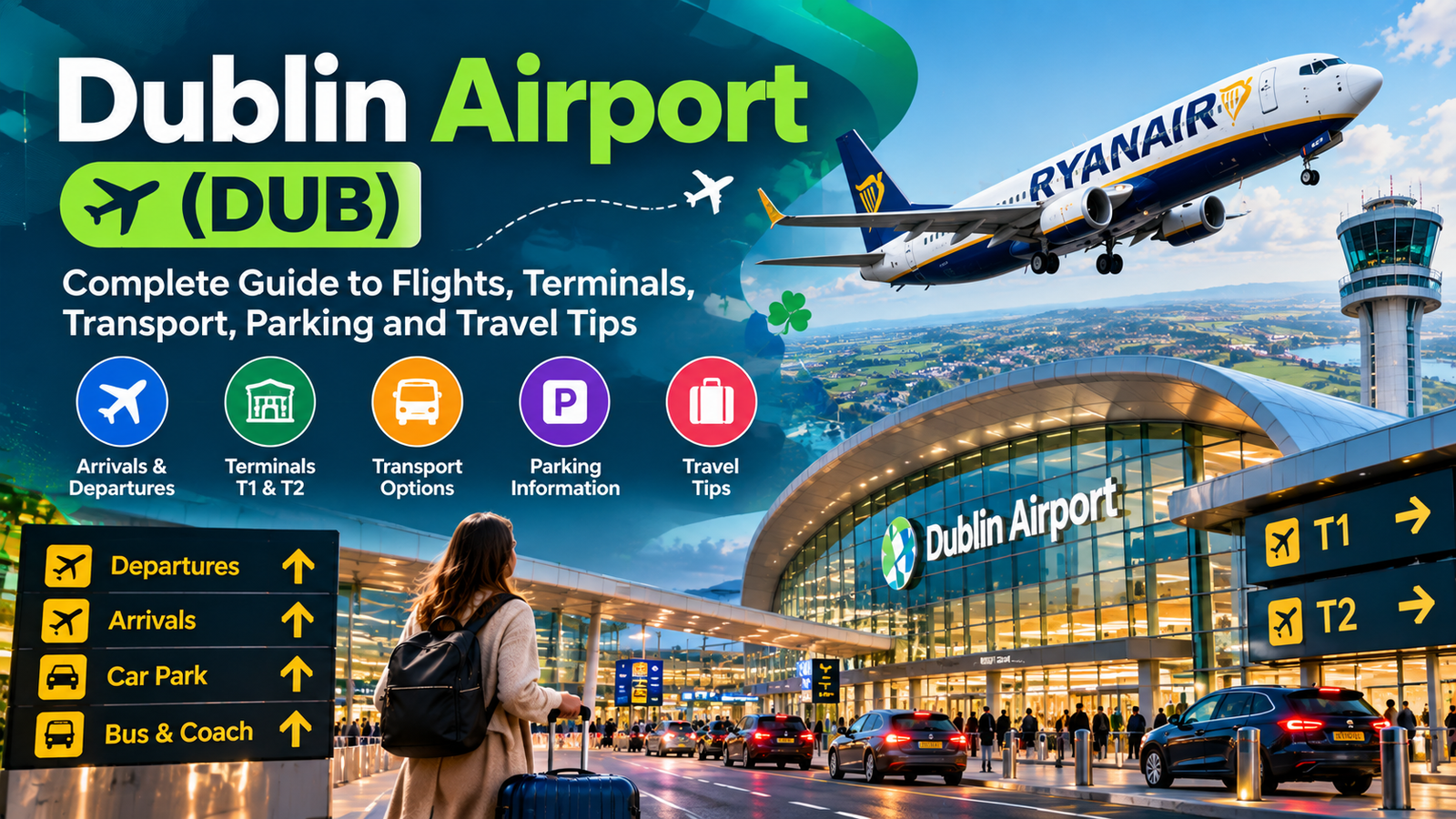
Whether you are travelling abroad for a holiday, welcoming family home or visiting another part of Ireland, understanding how Dublin Airport works can make your journey easier. Dublin Airport, identified by the airport code DUB, is Ireland’s main international airport and connects travellers with destinations across Europe and beyond.
From checking flight times to booking parking and choosing public transport, preparing in advance can save time and reduce travel stress. Dublin Airport provides two passenger terminals, transport connections, restaurants, shops and services for arriving and departing passengers.
This guide explains everything you need to know about Dublin Airport (DUB), including terminals, arrivals and departures, transport options, parking facilities and practical travel tips.
What Is Dublin Airport (DUB)?
Dublin Airport is located approximately 10 kilometres north of Dublin city centre. Its three-letter airport code, DUB, appears on flight bookings, boarding passes, luggage tags and travel itineraries.
The airport serves passengers travelling for holidays, business, education and family visits. It connects Ireland with destinations throughout Europe, North America and other international regions.
Dublin Airport has two passenger terminals: Terminal 1 and Terminal 2. Both provide check-in facilities, security screening, food and drink options, shops and passenger services.
Before travelling, confirm your departure terminal using your airline booking and the official airport website.
Official website: https://www.dublinairport.com/
Dublin Airport Terminal 1 vs Terminal 2
Knowing which terminal you need is an important part of planning your journey through Dublin Airport.
Terminal 1
Terminal 1 serves many short-haul European flights and other airline operations. Ryanair is among the airlines operating from this terminal. Passengers can find check-in areas, security screening, departure gates, shops and food outlets.
Terminal 2
Terminal 2 serves airlines including Aer Lingus and several international carriers. It also provides US preclearance facilities for eligible passengers travelling to the United States.
If you are flying to the US, review your airline’s instructions and allow enough time for additional departure procedures.
Airline operations and terminal arrangements can change, so always follow the latest instructions provided by your airline and Dublin Airport.
How to Check Dublin Airport Arrivals and Departures
Checking live flight information before leaving home can help you avoid unnecessary delays and confusion. Dublin Airport provides online arrivals and departures information, allowing passengers to check scheduled times, flight status and other relevant details.
Follow these simple steps:
- Visit the official Dublin Airport website.
- Open the arrivals or departures section.
- Search using your flight number, airline or destination.
- Review the scheduled time, flight status and terminal.
- Check for updates before travelling to the airport.
Flight times may change because of weather conditions, operational issues or airline scheduling. If you are collecting a passenger, check the arrival status before starting your journey.
Useful links:
Live Departures: https://www.dublinairport.com/flight-information/live-departures
Live Arrivals: https://www.dublinairport.com/flight-information/live-arrivals
How to Get to Dublin Airport
Travellers can reach Dublin Airport by bus, coach, taxi or private car. Your choice depends on your starting location, travel time, luggage and budget.
By Bus or Coach
Bus and coach services connect Dublin Airport with the city centre, Greater Dublin and various destinations across Ireland. Depending on the operator and route, passengers may be able to travel directly to cities such as Cork, Galway, Limerick and Belfast.
Check timetables, fares, journey duration and departure stops before travelling. The Transport for Ireland website can help you plan public transport journeys.
By Taxi
Taxi ranks are available outside both terminals. Taxis can be convenient for families, passengers carrying several bags or travellers heading to locations without direct bus connections.
Use an authorised taxi and consider traffic conditions when estimating your journey time.
By Car
Drivers can reach Dublin Airport through the local road network, including connections to the M1 and M50. Allow additional time during busy commuting periods and holiday weekends.
For transport information, visit: https://www.dublinairport.com/to-from-the-airport
Dublin Airport Parking: What Should You Know?
Dublin Airport offers short-term and long-term parking options for different travel needs. Short-term parking may suit brief visits, while long-term parking is intended for passengers leaving their vehicles during holidays or business trips.
Before booking, compare parking prices, location, duration and transfer arrangements. Some long-term car parks require passengers to use a shuttle bus to reach the terminals.
Parking spaces can be in high demand during busy travel periods, so booking ahead can help you plan costs and availability. If you are collecting or dropping off passengers, check the current airport arrangements rather than assuming every parking area allows waiting.
Official parking information: https://www.dublinairport.com/car-parks
Security, Check-In and Airport Facilities
Before arriving at Dublin Airport, check your airline’s check-in deadlines, baggage allowance and boarding requirements. Allow sufficient time to check in, drop off luggage if necessary, pass through security and walk to your departure gate.
During busy periods, queues may take longer than expected. Keep your passport, boarding pass and other required travel documents accessible.
Airport facilities include restaurants, cafés, shops, toilets, charging points and passenger assistance services. Facilities and their locations can vary between terminals, so consult the airport map or ask staff for directions.
Passengers with reduced mobility or other accessibility requirements should contact the airline and airport in advance to arrange suitable assistance.
Tips for a Smooth Journey Through Dublin Airport
A few simple preparations can make travelling through DUB easier.
- Check your terminal: Confirm the correct terminal before leaving home.
- Monitor your flight: Check live arrivals or departures for schedule changes.
- Arrive early: Follow your airline’s recommended arrival time.
- Prepare documents: Keep your passport, boarding pass and required documents accessible.
- Review baggage rules: Check size, weight and restricted-item requirements.
- Plan transport: Check bus timetables, taxi arrangements or parking availability.
- Use official information: Follow airport announcements and current guidance rather than relying on outdated online posts.
These steps are useful for short European trips and longer international journeys.
Frequently Asked Questions
What does DUB mean on a flight ticket?
DUB is the three-letter IATA airport code for Dublin Airport in Ireland.
How many terminals does Dublin Airport have?
Dublin Airport has two passenger terminals: Terminal 1 and Terminal 2.
How can I check live flights at Dublin Airport?
Use the official arrivals and departures pages, the airport app or the information screens inside the terminals.
Can I travel from Dublin Airport to other Irish cities by bus?
Yes. Bus and coach services connect the airport with Dublin city centre and various destinations across Ireland. Check current routes and timetables before travelling.
Should I book Dublin Airport parking in advance?
Booking ahead can help you plan your costs and secure a parking space, particularly during busy travel periods. Check current availability and booking terms on the official website.
Conclusion
Dublin Airport (DUB) is an important travel hub for Ireland, offering two passenger terminals, flight information services, transport connections, parking facilities and services for arriving and departing passengers.
Whether you are checking a flight, arranging a passenger collection, choosing airport parking or planning a bus journey, preparation can make your experience easier. Confirm your terminal, monitor flight updates and review transport arrangements before setting off.
For the latest information about flights, facilities, parking and transport, consult the official Dublin Airport website. A little planning can help you travel with greater confidence and enjoy a smoother airport experience.
