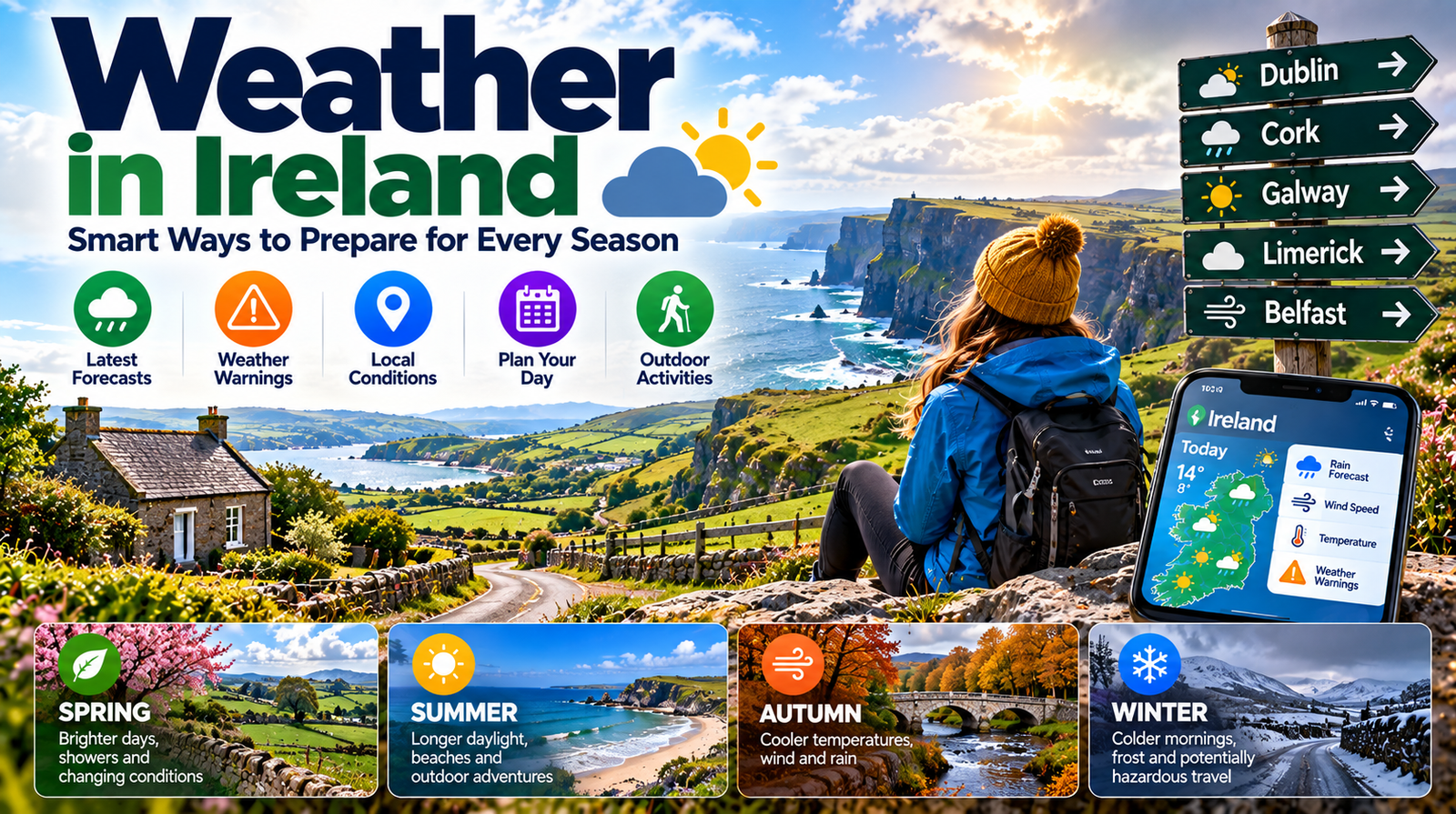
The weather in Ireland plays an important role in everyday life. It can influence your morning commute, weekend plans, outdoor activities, holidays and even what you wear before leaving home. A bright morning can turn cloudy, while a short spell of rain may give way to sunshine later in the day.
Ireland is known for its mild, changeable climate, with conditions varying between regions and throughout the year. Understanding local forecasts helps residents, commuters, families and visitors make practical decisions. Rather than relying only on a quick glance at the sky, checking a reliable forecast can help you prepare for changing conditions.
Whether you are planning a road trip, arranging an outdoor event or simply deciding what to wear, knowing how to check the weather forecast and understand official warnings can make everyday planning easier.
Why Does Irish Weather Change So Quickly?
Ireland’s weather is influenced by its position in the North Atlantic and its maritime climate. Atlantic weather systems can bring cloud, rain, wind and occasional brighter intervals. Conditions may differ considerably between the west coast, eastern counties, inland areas and higher ground.
Weather can change over a few hours or days, moving from showers to sunshine. However, stable and dry periods also occur, so conditions should not be assumed to follow the same pattern every day.
For example, the weather along the west coast may differ from conditions in Dublin or other eastern counties. Higher ground can also experience different temperatures and stronger winds.
If you are planning an outdoor activity, check the forecast for your specific location rather than relying only on a general national prediction. This helps you prepare for conditions that may affect your plans.
How to Check the Ireland Weather Forecast
A reliable forecast can help you decide when to travel, walk, exercise outdoors or plan a family day out. Met Éireann, Ireland’s national meteorological service, provides national and regional forecasts, local information, marine forecasts and weather warnings.
Use these official resources:
- National and regional forecasts: https://www.met.ie/forecasts
- Weather warnings and safety information: https://www.met.ie/warnings
When checking the weather in Ireland today, pay attention to more than the temperature. Rainfall, wind speed, visibility and the timing of showers can all affect your plans.
If you are travelling across several counties, check conditions along your route as well as at your destination. For coastal activities, pay attention to wind and marine conditions.
Remember that forecasts describe expected conditions rather than guaranteeing exactly what will happen. Recheck them when your plans depend on a particular time or location.
Understanding Ireland’s Four Seasons
Spring: Changing Conditions and Brighter Days
Spring brings gradually longer days and a mixture of cool mornings, sunshine, showers and occasional windy spells. Temperatures can feel different depending on cloud cover and wind.
If you are exploring parks, gardens or walking trails, bring a lightweight waterproof jacket and comfortable footwear. Dressing in layers makes it easier to adjust when the weather changes.
Summer: Plan Around Daylight and Showers
Summer offers longer daylight hours and opportunities to explore Ireland’s beaches, coastal routes, towns and countryside. However, warm or sunny conditions are not guaranteed every day.
Check the forecast before planning a picnic, road trip or coastal walk. On particularly warm days, remember sun protection and drinking water, even when the temperature feels moderate.
Having a flexible plan can help you enjoy outdoor activities while preparing for occasional rain or changing conditions.
Autumn: Wind, Rain and Falling Temperatures
Autumn often brings cooler air, changing leaves, wet roads and increasingly unsettled conditions. Strong winds and heavy rain can affect outdoor events and travel.
Allow extra time for journeys during poor weather, and check for official warnings if severe conditions are forecast. Waterproof clothing and suitable footwear can make outdoor activities more comfortable.
Winter: Cold Mornings and Potentially Hazardous Travel
Winter days are shorter, with colder temperatures, rain, frost and occasional snow or ice in some areas. Conditions can be more difficult on rural roads and exposed routes.
Before driving, check for weather warnings and allow additional time where necessary. Keep warm clothing in your vehicle and avoid unnecessary journeys when authorities advise against travel.
What Do Ireland’s Weather Warnings Mean?
Ireland uses a colour-coded weather warning system to communicate potential risks and help people take suitable precautions.
- Yellow: Be aware of weather that may affect people or activities in exposed or vulnerable locations.
- Orange: Be prepared for conditions that could have a significant impact in affected areas.
- Red: Take action because severe weather may pose a serious risk.
Warnings may relate to wind, rain, snow, ice or high temperatures. Their likely effects depend on the hazard, location and activity.
Do not rely on the warning colour alone. Read the full warning to understand the expected conditions, affected areas, timing and recommended precautions.
Official guidance is available at:
Practical Tips for Everyday Life
You do not need to change all your plans whenever the forecast shows rain. A few simple habits can make changing conditions easier to manage.
- Check before leaving: Review the forecast in the morning and again before longer journeys.
- Dress in layers: Choose clothing that can be adjusted as temperatures and wind conditions change.
- Carry waterproof clothing: A compact rain jacket can be useful, while an umbrella may be less practical during strong winds.
- Plan outdoor activities flexibly: Keep an indoor alternative available for wet or windy periods.
- Travel carefully: Allow extra time during heavy rain, fog, frost or strong winds.
- Follow official advice: Take weather warnings seriously, particularly near the coast, rivers and flood-prone areas.
These small steps can help you stay comfortable while making safer decisions when conditions change.
How Weather Affects Travel and Outdoor Activities
Weather conditions can influence driving, walking, cycling and public transport. Heavy rain may reduce visibility, while strong winds can make exposed routes uncomfortable. Frost and ice can create additional risks during colder months.
Before a long journey, check the forecast for your departure point, route and destination. If severe weather is expected, consider whether you can change your travel time or choose another activity.
For coastal walks, hiking and outdoor events, check local conditions and any relevant warnings. Bring appropriate clothing, carry water when needed and tell someone about your plans if you are heading into a remote area.
A little preparation can help you enjoy Ireland’s countryside and coastal scenery while responding sensibly to changing conditions.
Frequently Asked Questions
Where can I check the weather in Ireland today?
Visit Met Éireann at https://www.met.ie/forecasts for national and regional forecasts. Select the location relevant to your plans.
Does the weather differ across Ireland?
Yes. Coastal exposure, geography, elevation and passing weather systems can produce different conditions across the country. Check a local forecast for the most relevant information.
Is Irish weather always rainy?
No. Ireland experiences rain and showers, but it also has dry periods and sunshine. Conditions vary by season, region and weather system.
How can I prepare for severe weather?
Monitor official warnings, secure outdoor items when strong winds are expected, avoid flooded roads and follow advice from emergency services and local authorities.
Which website provides official Irish weather warnings?
Met Éireann publishes official forecasts and warnings at https://www.met.ie/warnings.
Conclusion
The weather in Ireland can be unpredictable, but checking reliable forecasts and understanding seasonal conditions makes planning easier. Whether you are commuting, visiting a new county, organising an outdoor event or enjoying a weekend walk, use local forecasts and official warnings to guide your decisions.
A little preparation, flexible planning and suitable clothing can help you make the most of Ireland in every season. Check Met Éireann regularly for the latest forecasts and warnings before making plans that depend on the weather.
Official forecast website: https://www.met.ie/forecasts
