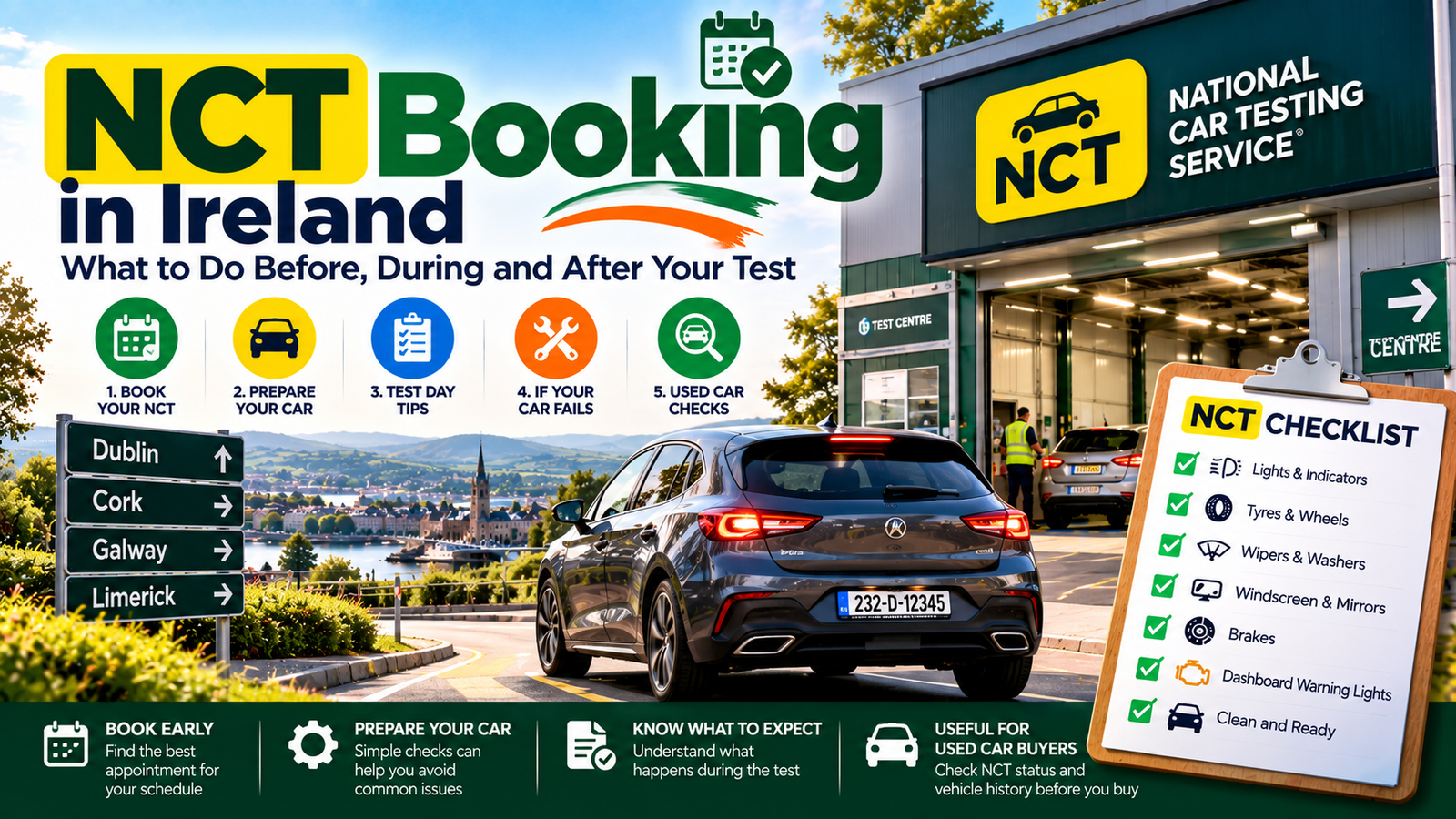
Getting your car ready for its NCT can feel stressful, especially if you depend on it every day. Whether you drive to work, take children to school, visit family or travel around Ireland at weekends, an unexpected vehicle problem can disrupt your plans.
The good news is that preparing for an NCT does not have to be complicated. By checking your vehicle in advance, understanding the booking process and knowing what to do if your car fails, you can approach the test with greater confidence.
This guide explains how to manage your NCT booking, prepare your vehicle, understand the testing process and arrange an NCT retest if necessary.
1. Start Your NCT Booking Early
One of the easiest ways to reduce stress is to check your NCT due date before your current certificate expires. Booking early gives you more time to find an appointment that suits your schedule.
Visit the official National Car Testing Service website:
Use the official booking system to check available appointments, choose a suitable test centre and review the booking conditions. Keep your vehicle registration details ready before starting.
If you cannot find a suitable appointment, check the official guidance about joining the priority list or contact the NCTS booking team. An earlier appointment is not guaranteed, so planning ahead is important.
Once your appointment is confirmed, save the date and time on your phone calendar. Setting a reminder a few days beforehand can help you avoid forgetting your booking.
2. NCT Test Preparation: Check Your Car Beforehand
Basic vehicle checks can help you identify common problems before arriving at the test centre. Although these checks cannot guarantee a pass, they are an important part of regular car maintenance.
Check Lights and Indicators
Make sure your headlights, brake lights, indicators and registration plate lights are working correctly. Ask someone to help you check the brake lights while you press the brake pedal.
Replace faulty bulbs and investigate electrical problems before the test.
Inspect Tyres and Wheels
Look for visible tyre damage, uneven wear and signs of punctures. Check that your tyres meet the applicable legal requirements for tread depth and condition.
Unusual tyre wear may indicate problems with wheel alignment, suspension or tyre pressure. If you notice anything concerning, ask a qualified mechanic for advice.
Check Windscreen, Wipers and Mirrors
Your windscreen should provide a clear view of the road. Check that the wipers are in good condition and the washer system works properly.
Mirrors should be secure and provide a clear view. Arrange repairs if any mirror is loose, cracked or obstructed.
Pay Attention to Brakes and Warning Lights
Squealing noises, vibrations, pulling to one side or changes in braking performance can indicate a problem that needs professional attention.
Check your dashboard for warning lights and consult your vehicle handbook or a qualified mechanic if you are unsure what they mean. Never ignore a suspected brake or steering fault simply because the car appears to drive normally.
3. What Happens on NCT Test Day?
Before leaving home, review your appointment confirmation and allow enough time to reach the test centre.
Follow the instructions provided by NCTS regarding vehicle presentation and required documentation. Keep your car reasonably clean and ensure the examiner can access the areas needed for inspection.
During the test, your vehicle undergoes checks covering relevant safety, roadworthiness and emissions requirements. The exact checks depend on the applicable testing procedures.
Remember that a relatively new car or a vehicle that has recently been serviced is not automatically guaranteed to pass. The inspection identifies defects according to the applicable requirements.
Similarly, failing the test does not necessarily mean your car is beyond repair. The test report will help you understand which areas require attention.
4. What If Your Car Fails the NCT?
A failed NCT can be frustrating, particularly if you depend on your car for work or family responsibilities. The most useful next step is to understand exactly why the vehicle failed.
Read the test report carefully and identify the defects recorded by the tester. If you do not understand the terminology, ask a qualified mechanic to explain the findings and recommend appropriate repairs.
Common areas that may require attention include tyres, lights, brakes, suspension, emissions and visibility. The actual repairs will depend on the defects identified in your report.
Arrange Repairs Promptly
Ask the mechanic to explain the problem and provide an estimate before approving the work. If several defects are listed, discuss which repairs are required to address the failures and ensure the vehicle is safe.
Check the NCT Retest Rules
Not every retest follows the same process. Depending on the failure and the type of retest required, you may need a vehicle inspection or a more limited check.
Check the current NCTS instructions for retest booking, fees and deadlines. Do not assume every failed vehicle can be retested in the same way.
Do Not Ignore Serious Defects
If the test report identifies a serious safety problem, seek professional advice before driving the vehicle again. Having a future retest appointment does not automatically make an unsafe vehicle safe to use.
5. Buying a Used Car in Ireland? Check the NCT
If you are searching for used cars in Ireland, checking the NCT should be part of your research rather than the only factor in your decision.
A vehicle with a valid NCT certificate may still have mechanical problems, cosmetic damage or maintenance needs. The certificate records the result at a particular point in time; it does not guarantee future reliability.
Before buying a used car:
- Verify the NCT status and expiry date.
- Review service records and maintenance invoices.
- Ask about previous NCT failures and completed repairs.
- Check available vehicle history, including relevant mileage and damage information.
- Arrange an independent mechanical inspection if possible.
- Compare the asking price with the vehicle’s condition and likely maintenance costs.
If the seller promises to complete a new NCT before the sale, clarify who will arrange it and what happens if the vehicle does not pass.
These checks can help you make a more informed decision and reduce the risk of unexpected repair costs.
6. Keep Your Car Ready Throughout the Year
Preparing for the NCT becomes easier when you maintain your car regularly instead of leaving everything until test day.
Check tyre condition and pressure, replace faulty bulbs, keep your windscreen clean and pay attention to unusual noises or dashboard warning lights. Follow the manufacturer’s service recommendations and arrange repairs when problems arise.
Keep service invoices and repair records together. These documents can help you track maintenance and may also be useful when selling your vehicle.
Regular maintenance supports vehicle safety, but it cannot guarantee an NCT pass because the official inspection covers specific requirements.
Frequently Asked Questions
How do I book an NCT in Ireland?
Visit the official NCTS website, enter the required vehicle details, check appointment availability and select a suitable test date.
What should I do if no NCT appointments are available?
Check the official priority-list guidance or contact the NCTS booking team. Availability and waiting times can change, so an earlier appointment cannot be guaranteed.
What happens if my car fails the NCT?
Review your test report, arrange the required repairs and follow the current NCTS instructions for the appropriate retest.
Does a valid NCT mean a used car is reliable?
No. An NCT is a roadworthiness inspection, not a guarantee of the vehicle’s overall condition or future reliability. Review the car’s history and consider an independent inspection.
Conclusion
Preparing properly for your NCT booking can help you avoid common mistakes and approach the test with greater confidence. Check your due date early, use the official booking service, inspect basic vehicle components and follow the test report if repairs are required.
If you are buying a used car, check its NCT status alongside its service history, overall condition and available vehicle history.
With regular maintenance and careful planning, you can make the NCT process more manageable and keep your car-maintenance plans organised.
Official NCTS website: https://www.ncts.ie/
