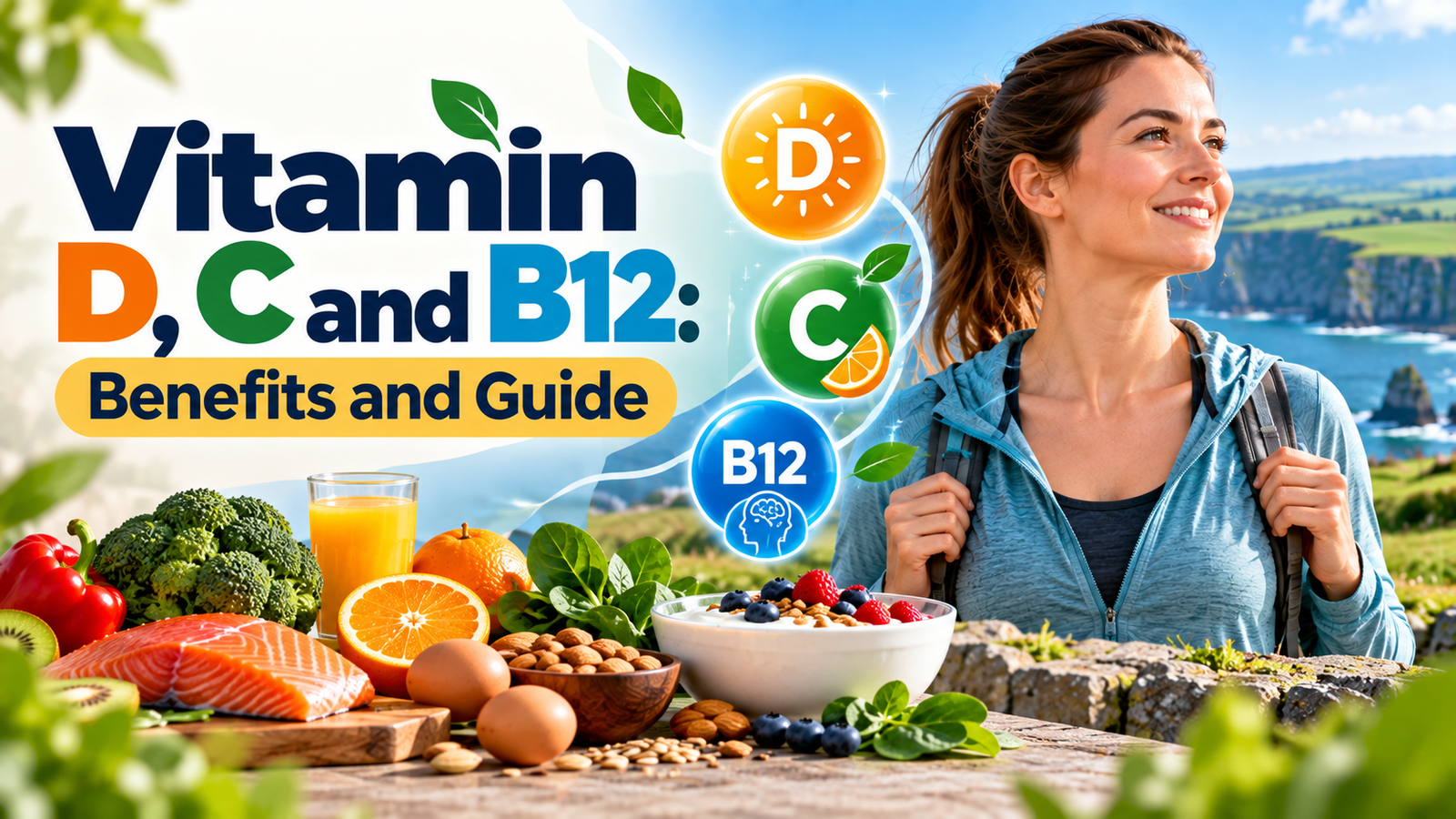
Are you getting enough essential vitamins to support your health? Vitamin D, vitamin C and vitamin B12 each play important roles in the body, from maintaining healthy bones and supporting normal immune function to helping produce red blood cells.
For people in Ireland, understanding these vitamins is particularly useful when planning a balanced diet or considering supplements. Vitamin D receives special attention because sunlight exposure varies throughout the year. Vitamin C is available in many fruits and vegetables, while vitamin B12 is especially important for people who eat little or no animal-based food.
This guide explains what these vitamins do, where to find them, who may need supplements and what to consider before buying them.
Vitamin D: Why Is It Important?
Vitamin D helps the body absorb calcium and phosphorus, which are needed to maintain healthy bones and teeth. It also contributes to normal muscle function and supports the normal functioning of the immune system.
The body produces vitamin D when skin is exposed to suitable sunlight. However, production depends on factors such as the season, time outdoors, skin characteristics and sun protection.
In Ireland, sunlight is generally insufficient for reliable vitamin D production during parts of the year. This makes it important to consider dietary sources and official supplementation guidance.
Sources of Vitamin D
Useful sources include:
- Oily fish, such as salmon and sardines.
- Egg yolks.
- Foods fortified with vitamin D.
- Vitamin D supplements when appropriate.
Not all foods contain significant amounts of vitamin D, so obtaining enough through diet alone can be difficult for some people.
Should You Take Vitamin D in Ireland?
Ireland’s public health guidance recommends vitamin D supplementation for relevant population groups, with recommendations varying by age and circumstances. The HSE provides current guidance on vitamin D, including advice for different age groups.
Official information: https://www2.hse.ie/conditions/vitamins-and-minerals/vitamin-d/
Check the recommended dose for your age and circumstances. Avoid taking high doses without professional advice because excessive vitamin D can cause harmful calcium build-up in the body.
Vitamin C: Supporting Everyday Health
Vitamin C is a water-soluble vitamin that contributes to normal immune system function, collagen formation and protection of cells from oxidative stress. Collagen is important for skin, blood vessels, cartilage and wound healing.
Vitamin C also improves the absorption of iron from plant-based foods. This can be useful for people who get much of their iron from beans, lentils and vegetables.
Foods Rich in Vitamin C
You can obtain vitamin C from many everyday foods, including:
- Oranges, lemons and other citrus fruits.
- Strawberries and kiwi fruit.
- Peppers.
- Broccoli and Brussels sprouts.
- Tomatoes and potatoes.
Eating a variety of fruits and vegetables is generally the best way to obtain vitamin C alongside other nutrients.
Do You Need Vitamin C Supplements?
Most people who eat a varied diet can obtain enough vitamin C from food. Supplements may be useful in certain circumstances, but taking large amounts does not guarantee better immunity or prevent every cold.
High doses can cause digestive discomfort, including diarrhoea and stomach cramps. People with certain medical conditions, including a history of kidney stones, should seek professional advice before using high-dose supplements.
Vitamin B12: Essential for Nerves and Red Blood Cells
Vitamin B12 supports normal red blood cell formation, nervous system function and energy-yielding metabolism. It also contributes to normal psychological function.
A deficiency can lead to tiredness, weakness, anaemia and neurological problems. Some symptoms may develop gradually, so it is important not to ignore persistent or unexplained changes in health.
Where Can You Get Vitamin B12?
Natural sources of vitamin B12 include:
- Meat and poultry.
- Fish and shellfish.
- Milk, cheese and other dairy products.
- Eggs.
Some plant-based products, including selected breakfast cereals and plant drinks, are fortified with vitamin B12. Always check the label because not every product contains added B12.
Who May Need Vitamin B12 Supplements?
People following a vegan diet generally need a reliable source of vitamin B12 through fortified foods or supplements because unfortified plant foods do not naturally provide dependable amounts.
Older adults and people with certain digestive conditions may have difficulty absorbing vitamin B12. Some medicines can also affect B12 status.
If you suspect a deficiency, consult your GP. A healthcare professional can assess whether testing and supplementation are appropriate. Do not rely on supplements alone to investigate persistent fatigue or numbness.
Can You Take Vitamin D, C and B12 Together?
These vitamins have different functions, and many people can obtain them through a balanced diet. In some circumstances, taking more than one supplement may be appropriate.
However, taking multiple products can lead to unnecessary duplication, especially when multivitamins already contain some of the same nutrients.
Before combining supplements, check the amounts on each label and follow official guidance. Ask a pharmacist or GP for advice if you take medicines, have a medical condition or are unsure about the right dose.
Remember that supplements support nutritional needs; they do not replace a balanced diet or medical treatment.
How to Choose Vitamins in Ireland
When buying vitamin supplements in Ireland, consider these practical steps:
- Check your needs: Consider your diet, age and relevant health circumstances.
- Read the label: Check the nutrient amount, serving instructions and ingredients.
- Choose reliable retailers: Buy from reputable pharmacies or established suppliers.
- Avoid exaggerated claims: Be cautious of products promising to cure illnesses or guarantee immunity.
- Follow recommended doses: More is not always better, particularly with vitamin D.
For reliable information about nutrition and food supplements, visit the Food Safety Authority of Ireland:
Conclusion
Vitamin D, vitamin C and vitamin B12 each support important functions in the body. Vitamin D contributes to bone health and normal muscle function, vitamin C supports collagen formation and iron absorption, and vitamin B12 is essential for normal nerve function and red blood cell formation.
For people in Ireland, the right approach depends on diet, age and individual circumstances. Follow current HSE guidance on vitamin D, eat a varied diet rich in fruits and vegetables, and ensure a reliable source of B12 if you follow a vegan diet.
If you suspect a deficiency or are considering high-dose supplements, speak with your GP or pharmacist before starting.
