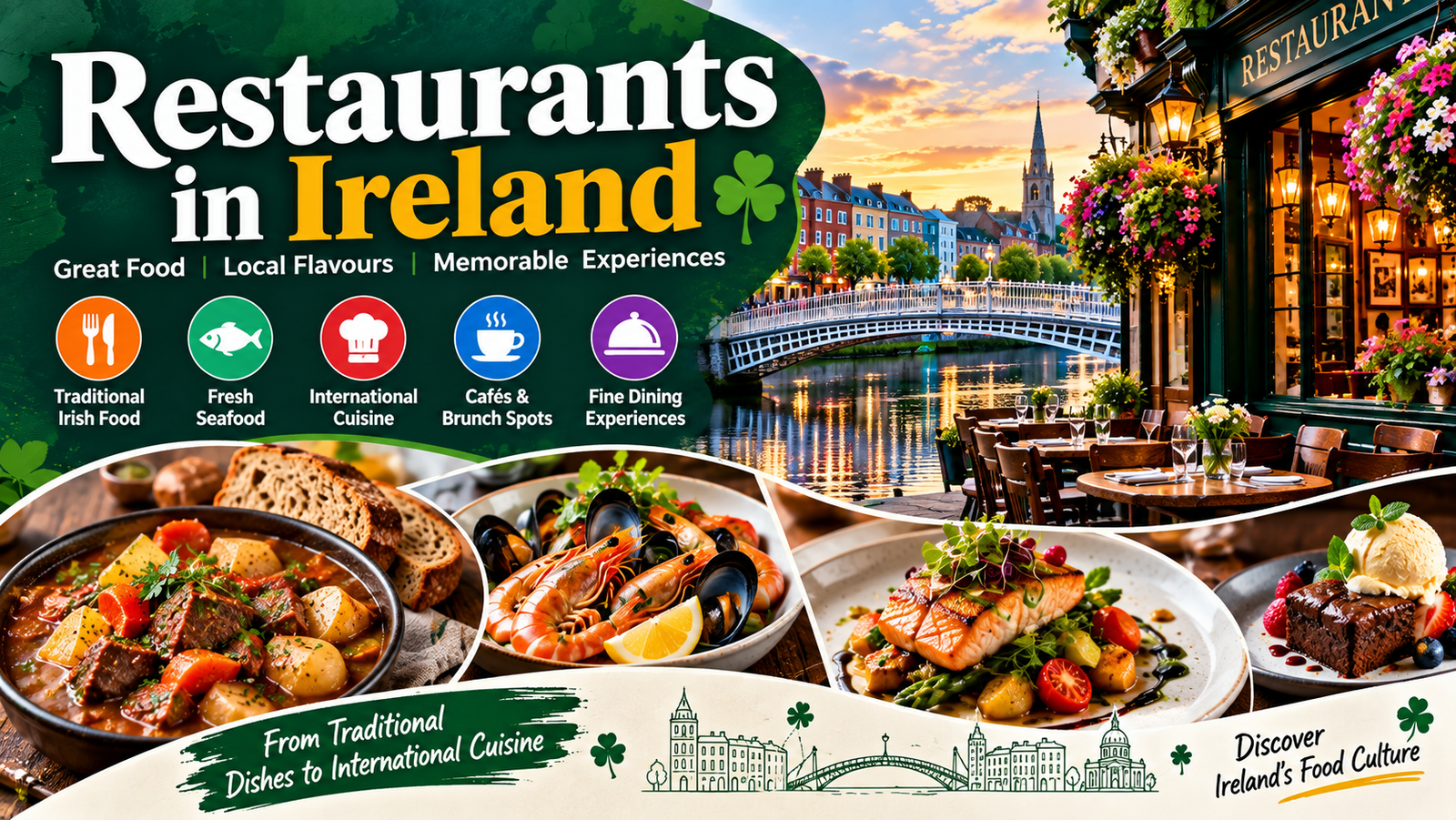
Ireland offers a wide range of dining experiences, from traditional meals in welcoming local pubs to modern restaurants serving creative dishes. Whether you are planning a city break, exploring the countryside or looking for somewhere to enjoy dinner with friends, you can find restaurants to suit different tastes, budgets and occasions.
Food is an important part of discovering a destination. A meal can introduce you to local ingredients, regional traditions and the people who produce Irish food. Across the country, restaurants serve everything from hearty comfort food and fresh seafood to international favourites and carefully prepared tasting menus.
If you want to explore Irish food culture, this guide will help you discover traditional dishes, explore popular dining destinations and choose restaurants that suit your preferences.
1. Discover Traditional Irish Food
Traditional Irish cooking is known for comforting meals, simple ingredients and dishes connected to local food traditions. Visitors can look for Irish stew, seafood chowder, brown soda bread, colcannon and Dublin coddle on menus around the country.
Irish stew is commonly prepared with meat, potatoes and vegetables, although recipes differ between households and restaurants. Colcannon combines mashed potatoes with cabbage or kale, while brown soda bread is a familiar accompaniment to many meals.
Many restaurants offer their own interpretations of traditional recipes. Some focus on classic home-style cooking, while others combine Irish ingredients with contemporary techniques.
If you are visiting Ireland for the first time, trying a traditional dish can be an enjoyable way to understand the country’s culinary heritage.
For food and drink inspiration, visit:
www.ireland.com/en/things-to-do/themes/food-and-drink/food-and-drink-in-ireland/
2. Enjoy Fresh Seafood Along the Irish Coast
Ireland’s coastline provides plenty of opportunities to enjoy seafood in seaside towns, fishing communities and city restaurants. Depending on the season and availability, menus may include oysters, mussels, crab, prawns, salmon and freshly prepared fish dishes.
Coastal areas in counties such as Galway, Clare, Kerry and Donegal are worth exploring if you enjoy seafood and scenic surroundings.
Seafood chowder served with brown bread is a popular option to look for. Grilled fish and shellfish dishes are also common, although ingredients and preparation methods vary between establishments.
If seafood is the main reason for your visit, check the restaurant’s menu before travelling. Some smaller venues have seasonal opening hours, and their menus may change according to the availability of local catches.
3. Explore Restaurants in Dublin
Dublin offers a diverse dining scene with traditional Irish restaurants, independent cafés, casual eateries and fine-dining venues. Visitors can find Italian, Indian, Japanese, Chinese, Mexican and many other international cuisines alongside local specialities.
The city centre is convenient for travellers combining sightseeing with a meal. After visiting attractions, you can explore nearby cafés, bakeries and restaurants. Neighbourhoods outside the busiest tourist areas may also offer independent dining spots and different menus.
When choosing among Dublin restaurants, compare menu prices, recent reviews and opening hours. If you are planning a weekend dinner, celebrating a special occasion or visiting with a larger group, consider booking a table in advance.
Official visitor information:
www.visitdublin.com/
4. Find Food Experiences in Cork and Galway
Cork and Galway are popular destinations for travellers interested in local food, regional produce and relaxed dining experiences.
Cork offers markets, cafés, restaurants and food businesses showcasing regional ingredients. Visitors can explore traditional dishes, contemporary menus and international options while discovering the city’s atmosphere.
Galway combines a lively cultural scene with access to Ireland’s Atlantic coastline. Restaurants may offer seafood, casual lunches, traditional hospitality and modern Irish cooking.
Both cities provide opportunities to explore local cafés and independent restaurants as well as established dining venues. Checking menus and reviews before your visit can help you find places that suit your interests.
Travel inspiration:
www.purecork.ie/
www.galwaytourism.ie/
5. Choose Between Casual Dining and Fine Dining
The right restaurant depends on your budget, the occasion and the atmosphere you prefer.
Casual dining: Cafés, neighbourhood eateries and relaxed restaurants are useful for quick lunches, informal meals and meeting friends.
Family dining: Look for clear menus, suitable seating and food options for adults and children. Contact the venue beforehand if you need high chairs or other facilities.
Special occasions: For birthdays, anniversaries and celebrations, consider restaurants offering set menus, tasting menus or quieter dining areas.
Vegetarian and vegan dining: Check the current menu and ask about ingredients and preparation methods. Options vary from one restaurant to another.
Fine dining: Some Irish restaurants offer multi-course menus featuring seasonal ingredients and creative cooking. These experiences may require advance reservations and a larger budget.
The MICHELIN Guide can help you explore restaurants included in its selection:
guide.michelin.com/ie/en/selection/republic-of-ireland/restaurants
6. How to Choose Restaurants That Suit Your Budget
Eating out in Ireland can suit different budgets, but prices vary according to location, menu and restaurant style. A café lunch offers a different experience from a multi-course dinner at a fine-dining venue.
Use these practical tips before choosing a restaurant:
- Compare menu prices before visiting.
- Check whether lunch menus or early dining offers are available.
- Read recent reviews for comments about food, service and value.
- Confirm opening hours, particularly during public holidays.
- Ask about booking requirements for larger groups.
- Check whether additional charges apply before ordering.
Planning ahead can help you avoid unexpected costs and select a restaurant that suits your occasion.
7. Support Local Irish Food Producers
Choosing restaurants that feature locally sourced ingredients can help you discover more about Ireland’s food culture. Some food businesses work with Irish farmers, fishermen, artisan producers and seasonal suppliers.
Menus may highlight regional cheeses, fresh fish, vegetables, meat, bread and other products. Ingredient availability depends on the restaurant and time of year, so look for sourcing information on the menu or ask staff about the ingredients.
Supporting businesses that showcase Irish produce can also provide an opportunity to learn about regional food traditions and seasonal cooking.
Good Food Ireland provides information about food businesses and experiences connected with Irish food and drink.
Visit:
goodfoodireland.ie/dining/
8. Check Food Allergies and Dietary Requirements
If you have a food allergy or specific dietary requirement, contact the restaurant before visiting and explain what you need. Ask staff about ingredients, preparation methods and the possibility of cross-contact with allergens.
Do not assume a dish is suitable based only on its name or menu description. Confirm the details when ordering, particularly if you have a serious allergy.
For consumer information about food safety in Ireland, visit:
www.fsai.ie/consumer-advice
Frequently Asked Questions
What food should visitors try in Ireland?
Traditional options include Irish stew, seafood chowder, soda bread and colcannon. Availability depends on the restaurant and region.
Where can I explore restaurants in Ireland?
Dublin, Cork and Galway offer varied dining choices. Coastal towns and rural destinations also provide opportunities to discover regional food and seafood.
Should I book a restaurant in advance?
Booking is useful for popular venues, weekend evenings, larger groups and special occasions. Check the restaurant’s own booking information before travelling.
Are there affordable restaurants in Ireland?
Yes. Cafés, casual eateries and restaurants offering lunch menus provide options for different budgets. Compare current prices to find a suitable choice.
How can I find restaurants serving local food?
Review menus for Irish ingredients, ask staff about regional specialities and consult food guides such as Good Food Ireland.
Conclusion
Exploring restaurants in Ireland is an enjoyable way to experience the country’s food culture. From traditional Irish dishes and fresh seafood to international cuisine and modern dining, there are options for different tastes, budgets and occasions.
Before heading out, check the menu, read recent reviews, confirm opening hours and make a reservation when needed. With a little planning, you can discover new flavours and enjoy memorable dining experiences throughout Ireland.
