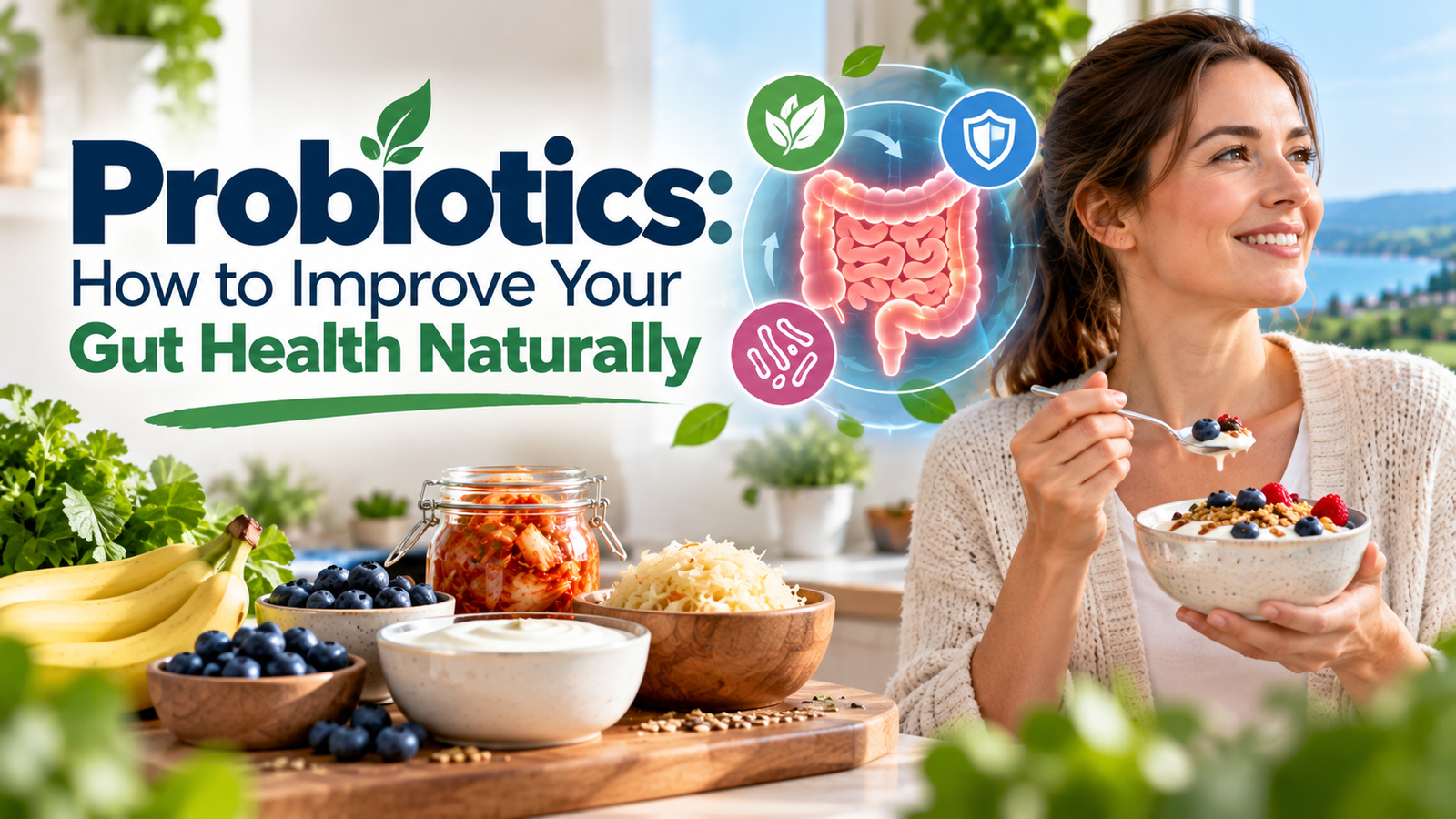
Do you want to improve your digestion and take better care of your gut? Probiotics are becoming increasingly popular among people interested in digestive health and nutrition. These live microorganisms can provide specific health benefits when consumed in adequate amounts, depending on the strain and the individual.
In Ireland, probiotics are available in live-culture yoghurts, fermented foods, capsules and powders. However, choosing the right product can be confusing because different probiotics have different uses. Some have been studied for particular digestive conditions, while others have limited evidence supporting their advertised benefits.
Understanding probiotics, their food sources and the importance of a balanced diet can help you make informed decisions about your gut health.
Why Is Gut Health Important?
Your digestive system breaks down food, absorbs nutrients and removes waste. It also contains a complex community of bacteria and other microorganisms known as the gut microbiome.
The gut microbiome interacts with your diet and immune system. Its composition can be influenced by age, lifestyle, medicines, illness and the foods you eat.
A healthy digestive routine involves more than taking supplements. Eating a varied diet, getting enough fibre, drinking sufficient fluids and staying physically active can all support normal bowel function.
Probiotics may offer additional benefits in specific circumstances, but they are not a guaranteed solution for every digestive problem.
What Are the Main Benefits of Probiotics?
1. Supporting Digestive Health
Some probiotic strains have been studied for their effects on digestive symptoms. However, the results vary depending on the strain and the condition being treated.
If you regularly experience bloating, constipation or abdominal discomfort, do not assume that probiotics are the answer. These symptoms can have several causes, and persistent problems should be discussed with your GP.
2. Potential Benefits for Antibiotic-Associated Diarrhoea
Antibiotics can affect the microorganisms living in the digestive system. Certain probiotic strains have been studied for their potential to reduce the risk of diarrhoea associated with antibiotic treatment.
The evidence differs between products and patient groups. If you are taking antibiotics, ask your pharmacist or GP whether a particular probiotic is appropriate and how it should be taken.
Probiotics should not replace prescribed medicines or medical advice.
3. Supporting Research Into IBS
Irritable bowel syndrome (IBS) can cause abdominal pain, bloating, constipation and diarrhoea. Some probiotics have been investigated for their potential to relieve particular symptoms, but research findings are mixed.
People with IBS may respond differently to the same product. A GP or registered dietitian can help you consider suitable options and assess whether a trial is worthwhile.
4. Contributing to a Healthy Gut Environment
Certain probiotics can influence the gut microbiome, although their effects are usually specific to the microorganisms used and the person taking them.
Eating a range of fibre-rich foods can also help support beneficial gut microorganisms. This is one reason why dietary variety matters when looking after digestive health.
5. Possible Interactions With Immune Function
The digestive system and immune system interact in several ways. Scientists continue to investigate whether specific probiotic strains may provide benefits for certain immune-related outcomes.
However, probiotics should not be considered a guaranteed way to prevent infections or strengthen immunity. A balanced diet, adequate sleep and recommended vaccinations remain important for general health.
Best Sources of Probiotics in Ireland
You do not always need capsules or powders to include live microorganisms in your diet. Some fermented foods available in Irish supermarkets may contain live cultures.
Live-culture yoghurt: Check the packaging for information about live cultures. Choose a product that fits your dietary needs and consider its added sugar content.
Kefir: This fermented drink may contain several types of live microorganisms. Dairy-free varieties are also available.
Fermented vegetables: Some products, such as unpasteurised sauerkraut and kimchi, may contain live cultures. Processing and storage affect whether microorganisms remain alive.
Other fermented foods: Certain fermented soy products contain microorganisms, although cooking may reduce the number of live cultures.
Remember that not every fermented food qualifies as a probiotic. Some foods are heated or processed in ways that eliminate live microorganisms, and not every live culture has a demonstrated health benefit.
Probiotics and Prebiotics: What Is the Difference?
Probiotics are live microorganisms that provide a health benefit when consumed in adequate amounts.
Prebiotics are substances, often particular types of dietary fibre, that are used by microorganisms in the body and provide a health benefit.
Prebiotic fibres are found in foods such as oats, beans, lentils, onions, garlic and some vegetables. Including these foods in a varied diet can help support the gut environment.
You do not necessarily need to purchase separate prebiotic supplements. Whole foods can provide fibre alongside vitamins, minerals and other nutrients.
How to Choose Probiotic Supplements
If you are considering probiotic supplements in Ireland, take time to check the product details before purchasing.
- Check the strain: Look for the full microorganism name and strain identification.
- Understand the intended use: Research supporting one strain for one condition does not automatically apply to other products.
- Read the label: Check the serving instructions, storage requirements, expiry date and live microorganism information.
- Choose reputable sellers: Buy from established pharmacies or retailers that provide clear product information.
- Ask for professional advice: A pharmacist, GP or registered dietitian can help you decide whether a supplement is suitable.
Some people experience temporary gas or bloating when using probiotics. People with weakened immune systems or serious underlying illnesses should seek medical advice before taking them because certain products may carry additional risks.
For information about food supplements in Ireland, visit:
Simple Habits to Support Gut Health
Alongside probiotics, everyday habits can help support normal digestion.
Eat a variety of fruits, vegetables, whole grains and legumes. If your current diet is low in fibre, increase your intake gradually to help your digestive system adjust.
Drink enough water, exercise regularly and maintain a consistent sleep routine. Avoid unnecessary restrictive diets, particularly if you are eliminating several food groups without professional guidance.
Pay attention to recurring symptoms and possible food triggers. Seek medical advice if you experience persistent digestive problems, unexplained weight loss, blood in your stools or severe abdominal pain.
Conclusion
Probiotics may help with certain digestive concerns, but their effects depend on the strain, the condition and individual circumstances. Some fermented foods provide live cultures, while fibre-rich foods support gut microorganisms in a different way.
For people in Ireland, a balanced diet and healthy daily habits are sensible foundations for digestive health. Probiotic supplements may be useful in selected situations, but they are not essential for everyone and should not replace medical treatment.
Before purchasing a supplement, check its ingredients, intended use and supporting evidence. If you have ongoing digestive symptoms or a medical condition, speak with your GP or pharmacist to determine the most appropriate next steps.
