Looking for a job can be challenging. You might send several applications without receiving a reply, struggle to decide which career suits you or wonder how to stand out when other candidates have similar qualifications.
The solution is not always to send more applications. Sometimes, a better approach is to understand what employers need, improve your application and use the right resources to find suitable opportunities.
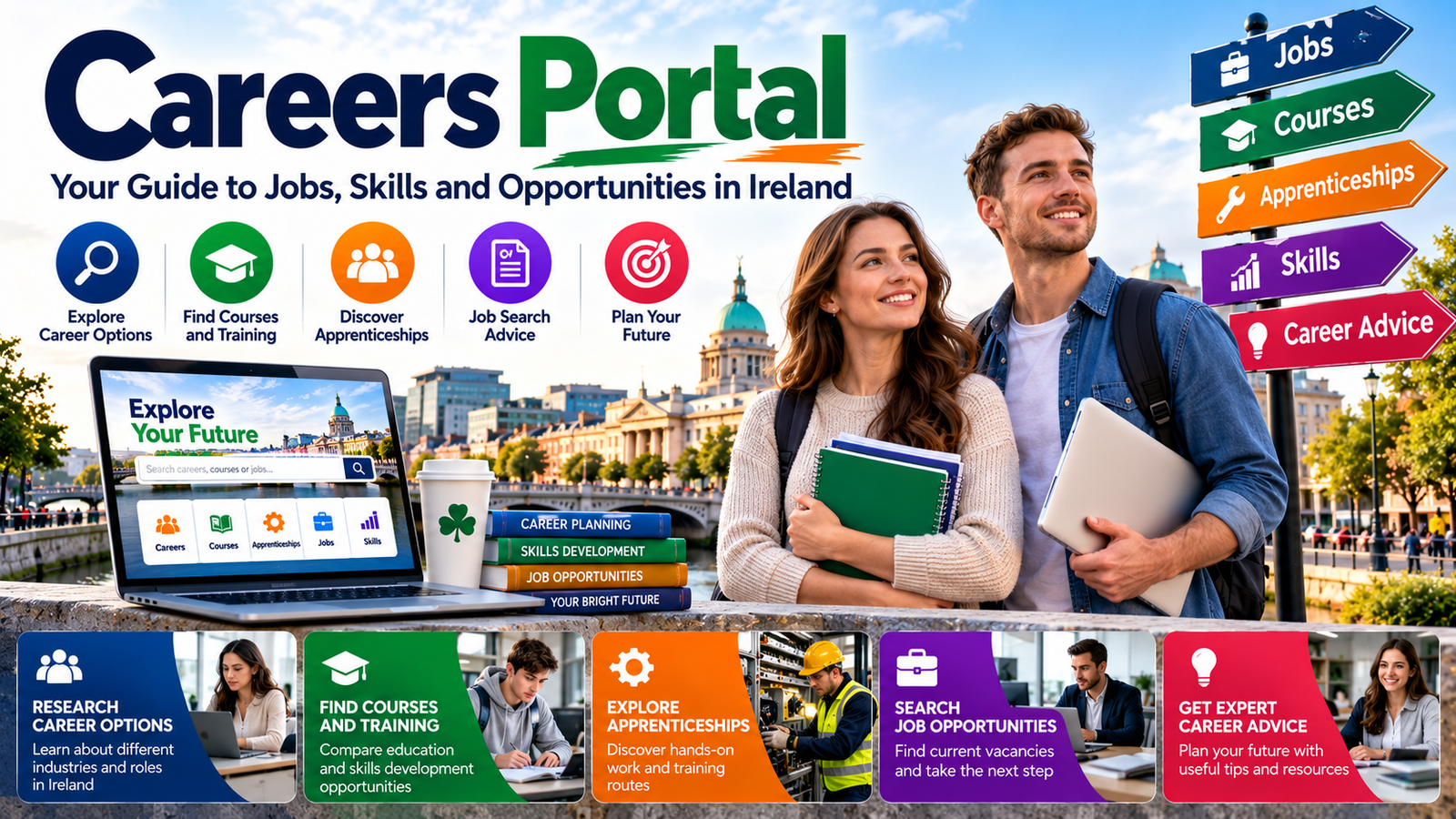
A careers portal can help you explore occupations, discover training options and plan your next steps. In Ireland, career resources are available for school leavers, college graduates, experienced professionals and people returning to work after a break.
This guide shares 10 practical ways to improve your job search, make your CV more effective and prepare for your next career opportunity.
1. Use a Careers Portal to Explore Your Options
Before applying for jobs, take time to understand which roles match your interests, abilities and experience.
CareersPortal.ie provides information about occupations, courses, apprenticeships, career sectors and self-assessment tools. These resources can help you compare different pathways instead of choosing a job based only on its title. <Cite refs={[“turn347344search1”]}/>
Start here: https://careersportal.ie/
Explore a few occupations and compare their daily responsibilities, entry requirements and possible progression routes. If you discover a role that interests you, write down the qualifications and skills you may need.
You do not have to choose your entire career immediately. Begin with a shortlist and research each option carefully.
2. Search for Jobs Using the Right Keywords
Searching for a job using only a broad term such as “office job” or “full-time work” may return many results that do not match your experience.
Try more specific searches, such as:
- Customer service assistant
- Junior accounts administrator
- Digital marketing executive
- Warehouse operative
- Healthcare assistant
- Apprentice electrician
- Graduate software developer
You can also search by town or county, working arrangement, experience level and industry where these filters are available.
Read the complete job description before applying. Check the responsibilities, qualifications, location, working hours and application deadline.
3. Check Ireland’s Public Job Search Service
Alongside career guidance websites, use official employment resources to look for vacancies.
JobsIreland.ie is Ireland’s public employment service website. It provides job searches, registration and application features, employment supports and information about CV preparation and interviews. <Cite refs={[“turn347344search4″,”turn347344search8”]}/>
Visit: https://jobsireland.ie/en-US/job-seekers
Create a profile if appropriate, complete the relevant information and explore jobs that match your experience. Check application instructions for each vacancy because employers may request an online application, email or another method.
Keep a record of the jobs you apply for, including the employer, closing date and any follow-up required.
4. Write a CV That Shows Your Value
Your CV is often the first opportunity to explain why you may be suitable for a position. Employers need to understand your experience and relevant skills quickly.
Use a clear layout with sections for your contact details, professional summary, employment history, education and relevant skills.
When describing previous work, focus on responsibilities and achievements that relate to the role.
For example, instead of writing “Worked in a shop”, you could explain that you assisted customers, processed transactions, replenished stock and helped maintain accurate inventory records, if those tasks reflect your actual experience.
Keep your information truthful and relevant. You do not need to include every task from every previous job.
5. Tailor Every Application
Sending the same CV to every employer may save time initially, but it can make your application less relevant.
Before applying, identify the main requirements in the job description. Then highlight the experience, qualifications and skills you genuinely have that match those requirements.
For an administration position, relevant examples might include scheduling, document management and customer communication. For a technical role, you might emphasise specific tools, practical projects or relevant certifications.
You can keep a master CV containing your full experience and create a tailored version for each application.
6. Prepare for Interviews Before the Invitation Arrives
Interview preparation should begin before you receive an interview date.
Read about the organisation, understand the role and prepare examples of how you have handled relevant tasks or challenges.
Common questions include:
- Tell me about yourself.
- Why are you interested in this role?
- What skills would you bring to the team?
- Describe a time you solved a problem.
- What would you like to learn in this position?
Use real examples from employment, education, volunteering or personal projects. Explain the situation, what you did and the result.
For an online interview, test your internet connection, microphone and camera beforehand. For an in-person interview, check the location and travel time so you can arrive promptly.
7. Consider Apprenticeships and Training
Not every career requires the same education route. Depending on your goals, an apprenticeship, further education course, professional qualification or short training programme may help you gain relevant skills.
Apprenticeships combine workplace learning with structured education and training. They can provide a route into selected occupations for people who prefer learning through practical experience.
Before enrolling in any course, check its entry requirements, duration, fees, recognised qualifications and progression options.
If you are changing careers, focus on skills that employers in your intended field actually request. This can help you choose training that supports your goals rather than collecting qualifications without a clear purpose.
8. Build Skills While You Search
A job search can also be an opportunity to improve your skills.
Depending on the roles you want, useful areas to develop may include:
- Digital and computer skills
- Written and verbal communication
- Customer service
- Project organisation
- Data analysis
- Industry-specific technical knowledge
- Problem-solving and teamwork
You can gain experience through courses, volunteering, personal projects or relevant work placements.
Keep examples of what you learn. A completed project or practical example may help you explain your abilities more clearly during an interview.
9. Avoid Job Scams
Jobseekers should be cautious about vacancies that promise unusually high earnings for very little work or demand payment before offering employment.
Watch for warning signs such as requests for sensitive financial details early in the process, pressure to act immediately, vague company information or communication from suspicious email addresses.
Before accepting an offer, check that the employer and vacancy are genuine. Research the organisation independently and confirm the role through an official company website or a recognised recruitment service.
Never assume a job is legitimate simply because it appears on social media or uses a professional-looking logo.
If something feels suspicious, pause and verify the details before sharing personal information or sending money.
10. Create a Weekly Job Search Routine
A consistent routine can make your job search more organised and easier to manage.
Try setting aside time each week to:
- Search for relevant vacancies.
- Tailor and submit applications.
- Follow up on applications where appropriate.
- Practise interview answers.
- Improve one useful skill.
- Review your progress and update your CV.
Keep a simple spreadsheet or document with the job title, employer, application date, closing date and current status.
This helps you avoid missing deadlines and identify which types of roles you want to pursue.
Remember that finding a suitable job can take time. Focus on the quality and relevance of your applications rather than measuring progress only by the number sent.
Frequently Asked Questions
What is a careers portal?
A careers portal is an online resource for researching occupations, education, training and career options. Some websites also provide job listings and application tools.
Can I use a careers portal if I have no work experience?
Yes. Career resources can help school leavers, graduates and first-time jobseekers explore entry-level jobs, apprenticeships, courses and ways to develop transferable skills.
Where can I find jobs in Ireland?
You can explore vacancies through JobsIreland.ie, employer websites and reputable recruitment services. Check each vacancy’s requirements and application instructions.
How can I improve my chances of getting an interview?
Use a clear CV, tailor your application to the job description, provide relevant examples of your skills and check your application carefully before submitting it.
Should I take a course before applying for jobs?
Not necessarily. First, review the requirements of the roles you want. If you already meet them, you may be ready to apply. If you have a skills gap, relevant training could help.
Conclusion
A successful job search involves more than sending applications. By using a careers portal, researching suitable occupations, improving your CV, preparing for interviews and developing relevant skills, you can approach your search in a more organised way.
Whether you are looking for your first job, returning to work or planning a career change in Ireland, start with one practical step today. Research a role, update your CV or apply for a suitable vacancy. Consistent preparation can help you move closer to your next opportunity.
