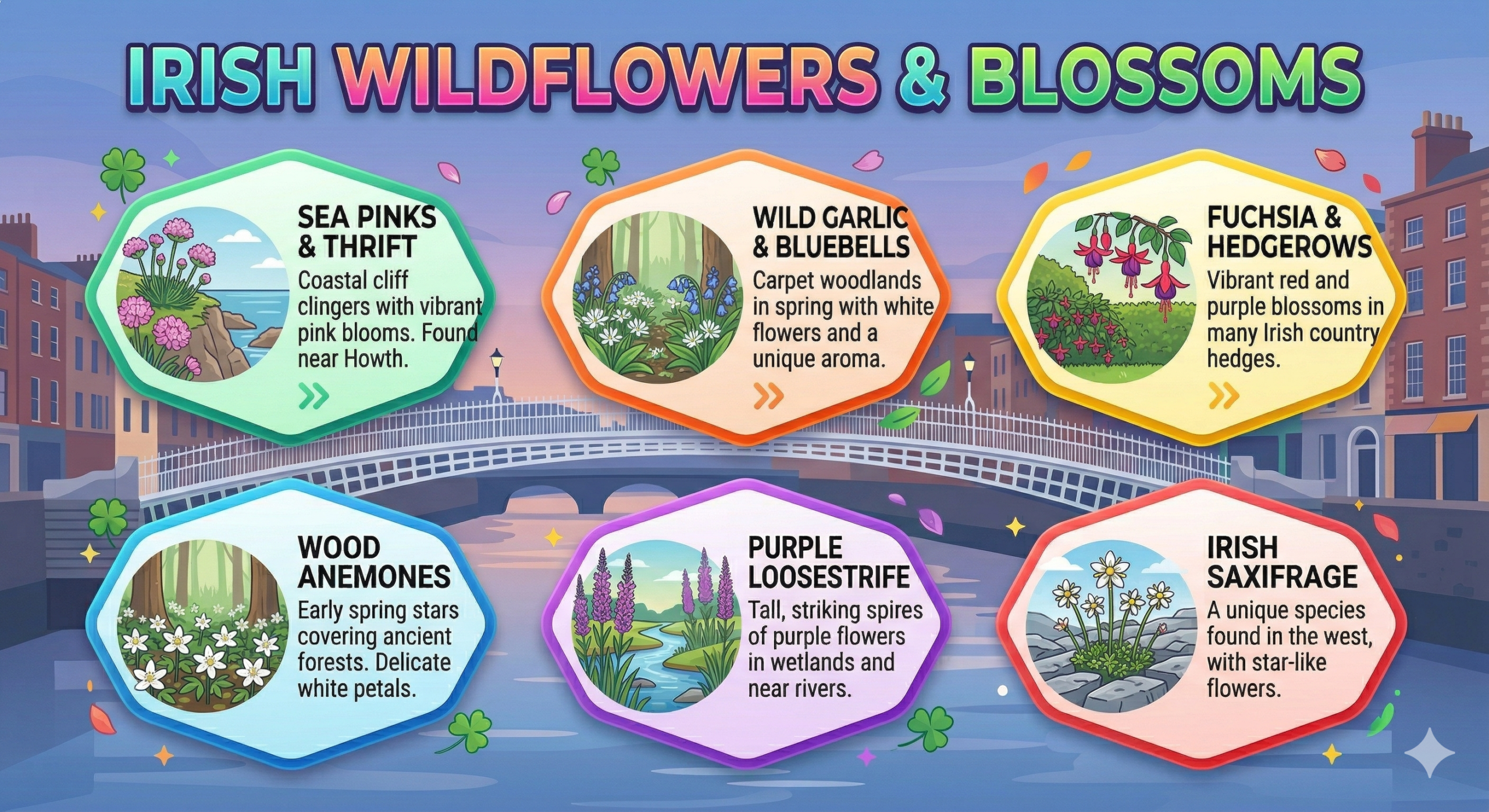
Whether you’re walking the rugged cliffs of Moher or just tending to a window box in Rathmines, there’s a new energy in the Irish air this year. In 2026, the “Maximalist Gardening” trend has officially arrived in Ireland, but with a sustainable twist: we are ditching the manicured lawns for the wild, layered beauty of our native botanical heritage. Here is your guide to exploring and growing the blooms that define the Irish landscape.
1. The 2026 Shift: “Lemonading” and Maximalism
This year, Irish gardeners are moving away from the “perfect” look. Two major trends are dominating:
-
Lemonading: This is the art of turning garden challenges into opportunities. Have a damp, boggy patch in your garden? Instead of draining it, we’re planting Marsh-marigold and Bog-rosemary.
-
Maximalist Rewilding: Forget sparse flower beds. 2026 is about “more is more.” We’re seeing dense, layered plantings of Foxgloves, Meadowsweet, and Wild Garlic to create a lush, jungle-like feel that supports our local pollinators.
2. Spring’s Ancient Guardians
As the “soft” weather of spring settles in, the Irish countryside transforms.
-
Primrose (Sabhaircín): A true herald of spring. Folklore tells us that leaving primroses on your doorstep keeps the fairies away. In 2026, they are being used as “edible groundcover” in urban Irish gardens.
-
Wood Anemone: Often called the “Windflower,” these delicate white blooms blanket our ancient woodlands, like those in Glendalough, before the tree canopy closes.
3. The Jewel of the West: The Burren
May 2026 marks another spectacular “Burren in Bloom” festival in County Clare. This limestone landscape is a botanical anomaly where Arctic and Mediterranean plants live as neighbors.
-
Spring Gentian: Its shocking “gemstone blue” petals are the poster child for the Jewel-Toned trend seen in Irish design this year.
-
Mountain Avens: A hardy survivor from the Ice Age that still thrives in the limestone cracks (grykes) of the West.
4. Summer’s Folklore & Fragrance
-
Meadowsweet (Airgead Luachra): Once a sacred herb to the Druids, its almond-like scent is unmistakable in summer meadows. It was traditionally used to flavor mead and strewn across floors to freshen homes.
-
Gorse (Aiteann): While it blooms nearly year-round, its coconut-scented yellow flowers are most vibrant now. It represents protection and fertility in the Ogham calendar.
5. How to Support Native Blooms at Home
You don’t need a massive estate to participate in Ireland’s botanical revival.
-
-
Reduce Mowing: Let your lawn “breath” in May to allow Cuckooflowers and Clover to feed the bees.
-
Plant “Lesser-Knowns”: Look for Bird’s-foot Trefoil or Sheep’s-bit at your local garden center. They are drought-resistant and perfectly adapted to our 2026 climate shifts.
-
Collect Seeds: Late summer is the time to gather dried seed heads from Foxgloves and Poppies to scatter for next year.
-
