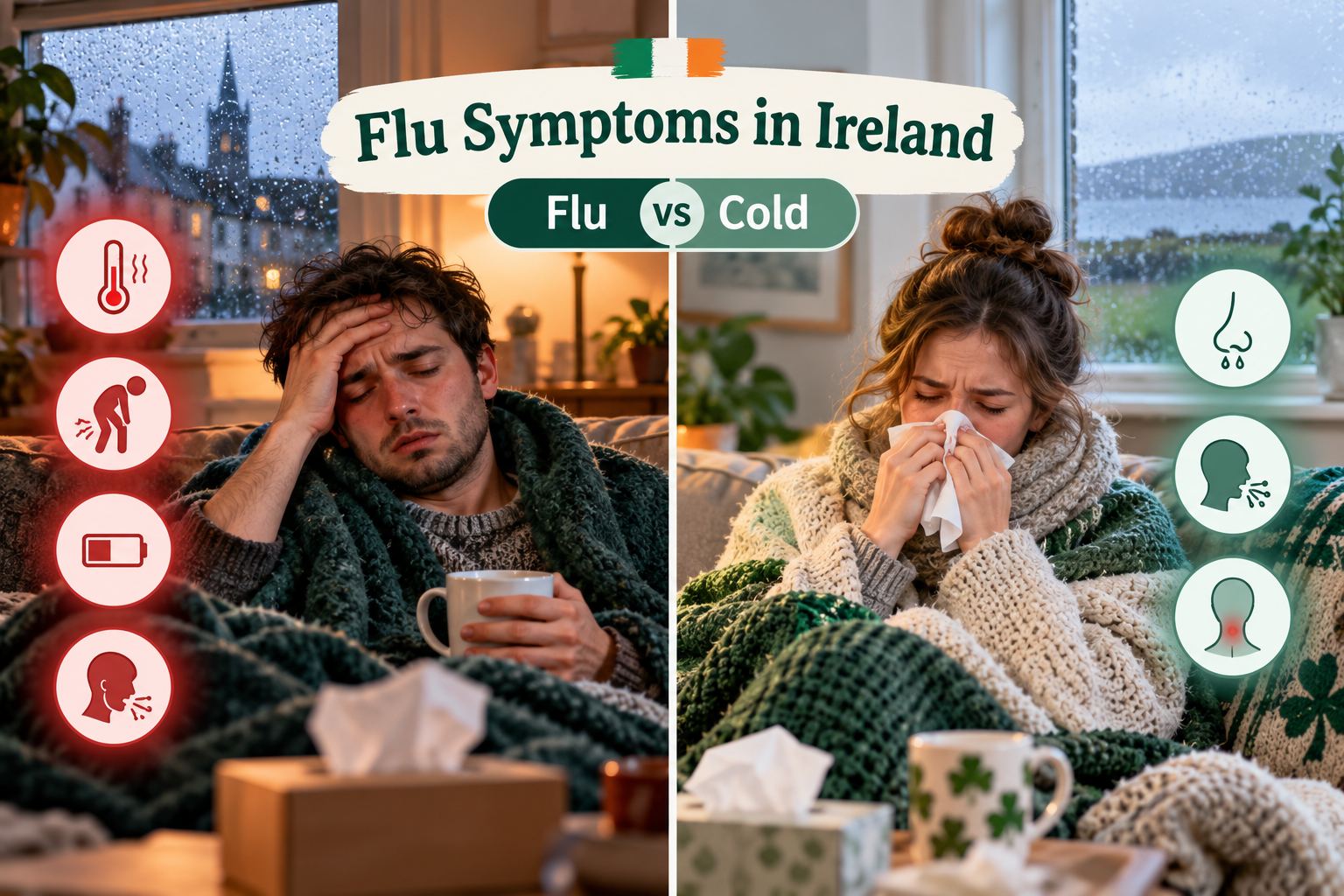
Flu and the common cold are common respiratory illnesses in Ireland, especially during the colder months. Both can cause a cough, sore throat, runny nose and tiredness, making it difficult to know which illness you have. However, flu symptoms often appear suddenly and can be more severe than cold symptoms.
Understanding the difference between flu and a common cold can help you decide how to care for yourself, when to stay home and when to contact your GP. This is particularly important for older adults, pregnant women, young children and people with long-term medical conditions.
This guide explains the main flu symptoms, how they compare with a cold, what you can do at home and where to find reliable health advice in Ireland.
What Are the Common Flu Symptoms?
Influenza, commonly called flu, is a viral infection that affects the respiratory system. Symptoms can develop quickly, sometimes within a few hours, and may leave you feeling too unwell to carry out your normal daily activities.
Common flu symptoms include:
- A sudden high temperature or fever
- Chills and sweating
- Muscle aches and body pain
- Headaches
- Extreme tiredness or weakness
- A dry or persistent cough
- A sore throat
- A runny or blocked nose
- Loss of appetite
Some people also experience difficulty sleeping or feel unusually exhausted for several days. Although fever is common with flu, not everyone develops one.
Most people gradually recover, but tiredness and coughing can continue after other symptoms improve. Recovery time varies depending on your age, general health and the severity of the infection.
For official information, visit: https://www2.hse.ie/conditions/flu/
Flu vs Common Cold: What Is the Difference?
Flu and colds share several symptoms, but the way they begin and how strongly they affect you can help you tell them apart.
Flu symptoms:
- Usually begin suddenly.
- Often include fever, chills and muscle aches.
- Can cause severe tiredness and weakness.
- May cause a significant cough and headache.
Common cold symptoms:
- Usually develop gradually.
- Often include sneezing and a runny or blocked nose.
- May cause a sore throat and mild cough.
- Usually cause less severe tiredness and body aches.
These differences are general patterns rather than a reliable diagnosis. Some people with flu have mild symptoms, while a cold can occasionally cause considerable discomfort. COVID-19 and other respiratory infections can also produce similar symptoms.
If you are unsure what is causing your illness, speak to a healthcare professional, particularly if you are at increased risk of complications.
How Long Do Flu and Cold Symptoms Last?
Flu symptoms often improve within three to seven days, although some people need longer to recover. Tiredness may continue for up to two weeks, and a cough can last three weeks or more.
A common cold usually improves within about a week, although some symptoms can last longer. The length of an illness varies from person to person.
Pay attention to whether your symptoms are improving rather than relying only on the number of days you have been ill. If you are not getting better after seven days, your symptoms suddenly become worse or you are concerned about your health, contact your GP for advice.
What Should You Do If You Have Flu Symptoms?
If you develop flu symptoms in Ireland, taking care of yourself and limiting contact with others can help you recover and reduce the spread of infection.
Here are practical steps you can follow:
- Get enough rest: Avoid strenuous exercise and give your body time to recover.
- Drink plenty of fluids: Water, soup and other suitable drinks can help prevent dehydration.
- Manage discomfort safely: Ask a pharmacist whether paracetamol or another medicine is suitable for your symptoms. Follow the label instructions and avoid taking multiple products that contain paracetamol.
- Stay at home while unwell: Avoid unnecessary contact with others, particularly people who may be more vulnerable to infection. Follow current HSE advice about returning to normal activities.
- Practise good hygiene: Wash your hands regularly, cover coughs and sneezes with a tissue or your sleeve, and dispose of used tissues promptly.
Antibiotics do not treat flu or the common cold because these illnesses are caused by viruses. Some people at higher risk of severe flu may benefit from prescription antiviral medicines, which generally work best when started early. Contact your GP promptly if you are in an at-risk group and develop flu symptoms.
HSE information: https://www2.hse.ie/conditions/flu/symptoms-diagnosis/
When Should You Contact a GP in Ireland?
Most people recover from flu or a cold at home, but some symptoms require medical attention.
Contact your GP if you have a long-term health condition, are pregnant, are aged 65 or older, or are worried that your symptoms are becoming more serious. Young children and people with weakened immune systems may also need additional care.
Seek urgent medical advice if you develop difficulty breathing or chest pain. If you or someone else needs immediate emergency medical attention, call 112 or 999 in Ireland.
Do not assume that severe symptoms are simply part of a cold or flu. COVID-19 and other respiratory infections can cause similar symptoms, so professional advice may be necessary when the cause is unclear.
How Can You Reduce Your Risk of Flu?
Flu spreads through respiratory particles and contact with contaminated hands or surfaces. Everyday hygiene measures can help reduce the risk of infection.
Wash your hands frequently, cover your mouth and nose when coughing or sneezing, and avoid close contact with others when you are ill. Keeping shared surfaces clean can also help limit the spread of respiratory infections.
The annual flu vaccine is another important way to reduce the risk of flu and serious illness. In Ireland, flu vaccination is available through GPs and participating pharmacies. The HSE offers the vaccine free to eligible groups, which can include adults aged 60 and older, children aged 2 to 17, pregnant women and certain people with medical conditions. Eligibility details can change, so check the latest HSE guidance.
Flu vaccination information: https://www2.hse.ie/conditions/flu/get-vaccine/
Conclusion
Understanding the difference between flu symptoms and a common cold can help you make informed decisions about rest, treatment and seeking medical advice. Flu often begins suddenly, causes stronger body aches and exhaustion, and can interfere with everyday activities. A cold usually develops gradually and mainly affects the nose and throat.
However, symptoms alone cannot always identify the virus responsible. Rest, fluids, good hygiene and appropriate advice from a pharmacist or GP can help you manage an illness safely. If your symptoms worsen, you belong to a higher-risk group or you experience difficulty breathing, seek medical advice promptly.
For reliable information about flu and cold symptoms in Ireland, consult the HSE website or speak to your healthcare professional.
